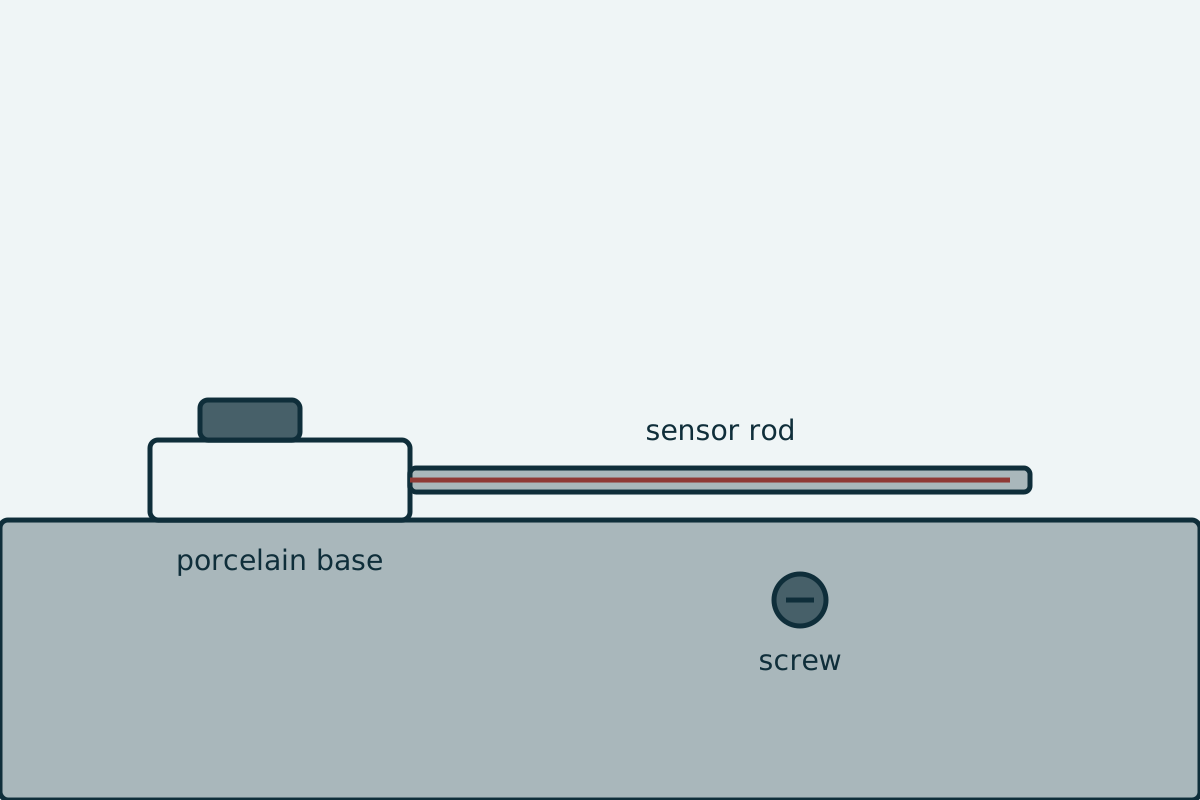
A flame sensor is a thin metal rod that sits in the burner flame and tells the furnace control board that the gas has lit. If it cannot sense the flame, the board shuts the gas valve within seconds as a safety measure. A dirty or worn sensor is one of the most common reasons a gas furnace lights and then goes out. Bob Vila's furnace repair guide puts general furnace repair at $100-600, and a local specialist quotes the real price for a sensor job. This page is part of the guide to furnace parts and ignition, and it explains the signs, the location and the next step.
What does a flame sensor do on a gas furnace?
The flame sensor proves that a flame is present after the gas valve opens. It does this with a small electrical signal that passes through the flame, which the control board reads. If the board does not see the signal, it closes the gas valve so unburned gas does not build up in the furnace.
Here is where the sensor fits in a normal start-up on a gas furnace with electronic ignition:
- The thermostat calls for heat and the control board checks its safety switches.
- The inducer fan starts and clears the heat exchanger of leftover gases.
- The pressure switch closes to confirm the vent is drawing.
- The igniter warms up, or sparks on some models.
- The gas valve opens and the burners light.
- The flame sensor confirms the flame. If it does not, the board shuts off the gas and tries again.
- The blower starts after a short delay and the furnace runs until the thermostat is satisfied.
So the sensor is a safety part, not a convenience part. If it fails, the furnace is doing the right thing by shutting down. Never try to bypass it. A furnace that keeps burning without proof of flame is a fire and carbon monoxide risk.
What are the different types of flame sensors?
Most modern gas furnaces use a flame rectification sensor, which is a metal rod that senses the electrical signal in the flame. Older furnaces with a standing pilot use a thermocouple instead, which is a different part that senses heat from the pilot flame. A few designs use a sensor built into the igniter.
The two main types you are likely to meet:
- Flame rectification rod. Used on furnaces with hot surface or spark ignition. It is the part people usually mean by "flame sensor." The rod is thin, with a porcelain base, and sits in the path of the burner flame.
- Thermocouple. Used on furnaces with a standing pilot light. It generates a tiny current when the pilot heats it, and that current holds the gas valve open. If the pilot goes out, the current stops and the valve closes.
The parts are not interchangeable. If you are looking at a replacement, the model number on your furnace tells a specialist which one it takes. HVAC.com notes that identifying which one you have comes before buying a replacement.
What does a flame sensor look like on my furnace?
A flame sensor is a small metal rod, often bent at an angle, with a porcelain section where it mounts. It sits just outside the burner assembly, in line with the flame. You cannot see it with the furnace covered, and you do not need to open the furnace to confirm you have one.
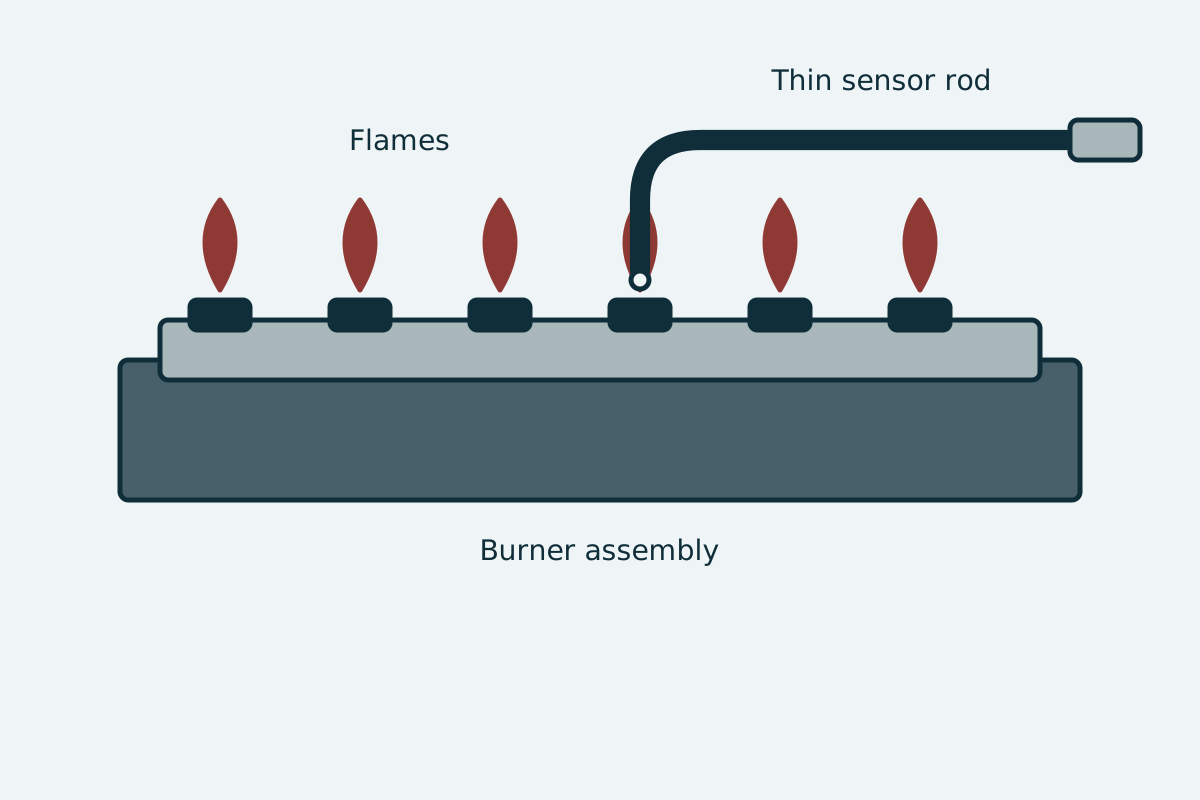
What to know about how it looks and where it sits:
- It has a single wire running to the control board.
- The tip may look dark gray or black with soot or oxide when it is dirty.
- It is mounted with a screw or bolt, and the porcelain should not be cracked.
Reaching it means removing the furnace access panel, which exposes gas, electrical and moving parts. That is a job for a local specialist, who will turn off the power and gas first. If you only want to look, check your owner's manual for a parts diagram, or ask the specialist to point it out during a visit.
How do I know if my furnace flame sensor is bad?
The classic sign is that the burners light, stay on for a few seconds, then shut off, and the cycle repeats. You may hear the inducer fan, the click of the igniter and the whoosh of the burners. Then silence, and no heat. Other signs include a blinking status light on the control board, and a furnace that cycles on and off.
Signs that point to a failing or dirty sensor:
- Burners light, then go out within about a few seconds.
- The furnace tries several times and then locks out.
- The furnace works for a while after a repair, then repeats the problem.
- A black or sooty tip, or cracked porcelain, if a specialist shows you the part.
- The furnace short cycles. The guide to furnace short cycling covers the other causes.
The sensor is not the only cause of this symptom. A weak ground, low gas pressure, a bad control board or a dirty burner can look the same. A flame sensor that cannot detect flame because of oxidation buildup is a common reason, but a specialist should confirm it. If you smell gas, leave the home and call 911 from outside. If a carbon monoxide alarm sounds, get everyone outside and call 911, as the CPSC advises, and have the furnace inspected before you use it again.
Safe things you can try first:
- Make sure the thermostat is on Heat and set above room temperature.
- Replace the filter. A clogged filter can cause shutdowns that look like sensor problems. See furnace filter replacement.
- Open the supply vents and clear the return grille.
- Check that the furnace switch and the breaker are on.
Leave anything past that to a specialist.
Where is the flame sensor on a gas furnace?
On a gas furnace with electronic ignition, the flame sensor is a metal rod located on the burner assembly, where it can sense the flame. The exact spot varies by model, so the owner's manual or the model number on the data plate matters. If your furnace has a standing pilot, the pilot flame is monitored by a thermocouple or similar device instead.
Carrier's own guide says a pilot light is a small standing flame found on older gas furnaces, generally those made before the mid-1990s. Newer furnaces use hot surface or intermittent pilot ignition. Carrier states that its current lines use those modern methods and not a standing pilot.
How to tell which type you have without touching anything:
- If there is a control board and no continuously burning small flame, you likely have electronic ignition and a flame sensor.
- If there is a small steady flame you can see near the burners, you have a standing pilot.
- If you are not sure, the owner's manual or the model number lookup tells you.
If you have a standing pilot and smell gas, do not try to light it. Leave the home and call 911 from outside. If the pilot keeps going out, a specialist should check it. The question of where the flame sensor sits comes up often because the sensor and the pilot components are both near the burners.
What does flame sensor repair usually cost in Sacramento?
There is no sourced price range for a flame sensor job on its own. Bob Vila's furnace repair guide puts general furnace repair at $100-600, which is the nearest sourced figure. Cleaning the sensor is the cheapest outcome. Replacement costs more, and the final bill depends on the service call fee, the furnace model and whether anything else is found.
| What | Sourced range | What moves it |
|---|---|---|
| Furnace repair, general | $100-600 | The part, access and labor |
| Flame sensor clean or replace | Ask for a written quote | Model, access, service call fee |
| Service call fee | Ask for a written quote | Time of day and the specialist |
| Related ignitor replacement | Ask for a written quote | Part type and furnace age |
A local specialist quotes the real price after looking at your furnace. If the sensor is only dirty, the fix is a cleaning, so ask whether cleaning was tried before replacement.
Ask for a written quote before work starts and ask what is included. C-20 is the CSLB classification for warm-air heating, ventilating and air-conditioning work. Ask any specialist for their license number and check it on the CSLB License Check page of the CSLB website.
If you want prices for a flame sensor repair, use the quote request on the Sacramento Heating and AC site. You can also read the furnace repair cost guide to see what other repairs usually cost.
Questions people ask
How long does furnace flame sensor take?
A cleaning or replacement is usually a short visit once the specialist is at your furnace. Expect the diagnosis to take longer than the swap, because the specialist checks that the sensor is the cause. The total depends on the furnace and on whether other parts, like the igniter, need attention too.
What should I ask before I hire someone for furnace flame sensor?
Ask for their California contractor license number and check it on the CSLB site. Ask whether they will clean the sensor or replace it, what the price is in writing, and whether the quote includes the service call fee. Ask what else they will check, such as the igniter and the venting.
Do I need to be home for furnace flame sensor?
Plan to be home, or have an adult there, at least at the start and the end. The specialist needs access to the furnace and the thermostat, and should explain what they found. They will also test that the furnace lights and stays lit before leaving.
Is it safe to clean a flame sensor myself?
Opening the furnace puts you near gas lines, electrical parts and sharp edges, and it is easy to disturb something else. Leave it to a local specialist. Safe jobs for you are the filter, the thermostat settings and clearing vents. If the furnace will not stay lit, switch it off at the thermostat and call.
Can a bad flame sensor cause a gas leak?
A bad sensor causes the furnace to shut the gas off, which is the safe response. The risk comes if someone bypasses the safety. If you smell gas at any time, leave the home and call 911 from outside. Do not use switches or lighters.
Where these facts come from
- HVAC.com, A complete guide to furnace flame sensors
- Carrier, Furnace pilot light: how it works, common problems and how to fix it
- PickHVAC, Gas furnace sequence of operations
- US EPA, Protect your family and yourself from carbon monoxide poisoning
- Bob Vila, furnace repair cost
- US CPSC, Carbon Monoxide Information Center
Page updated