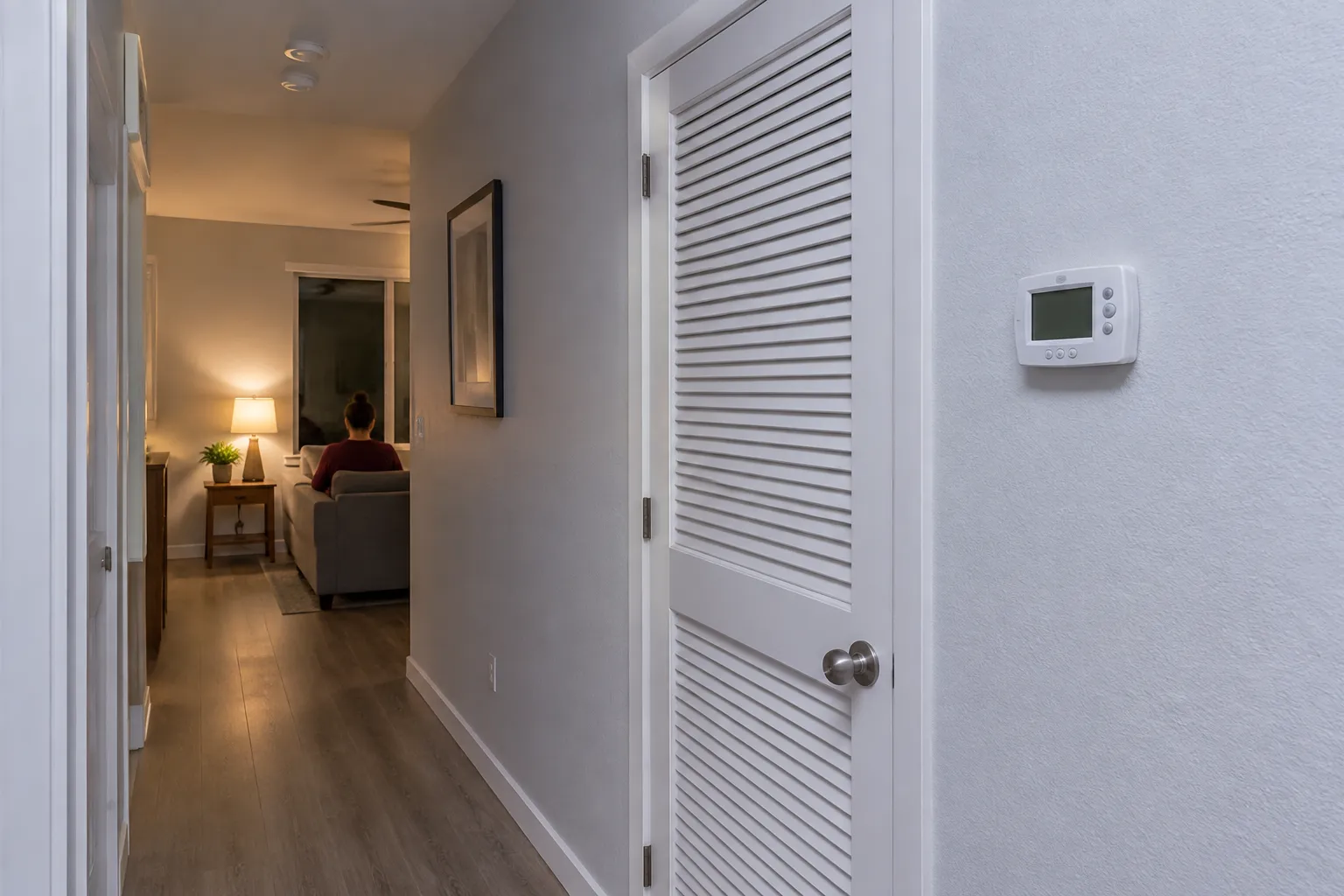
What counts as a furnace repair emergency?
A furnace repair emergency is a gas smell, a carbon monoxide alarm, burning or electrical smells, or no heat when someone in the home is very young, elderly, ill, or the house is getting cold fast. A furnace that is noisy, short cycling or only heating weakly is a problem to book, not a night-time emergency.
Treat these as safety emergencies first and repair jobs second:
- Smell of gas. Leave the home right away, then call 911 from outside.
- Carbon monoxide alarm sounding. The Consumer Product Safety Commission says to get outside to fresh air immediately and then call 911 if you suspect carbon monoxide poisoning. Headache, dizziness, weakness, nausea and confusion are the listed symptoms. Our page on furnace carbon monoxide explains more.
- Burning smell, smoke, or sparks from the furnace or its wiring. Turn the furnace off at the thermostat, leave the area, and call 911 if you see smoke or flame.
Anything else, such as a furnace that will not start, is a heating loss rather than an immediate danger. If a young child, an older adult or someone with a health condition is in the home and it is getting cold, treat it as urgent and say so when you ask for quotes.
What can I check before I call for emergency furnace repair?
Before you call, you can check four things that need no tools: the thermostat is set to heat with fresh batteries, the furnace switch and the breaker are on, the air filter is not clogged, and vents and returns are not blocked. These fixes are safe for anyone. Anything behind a panel, near the gas line or involving wiring is a job for a specialist.
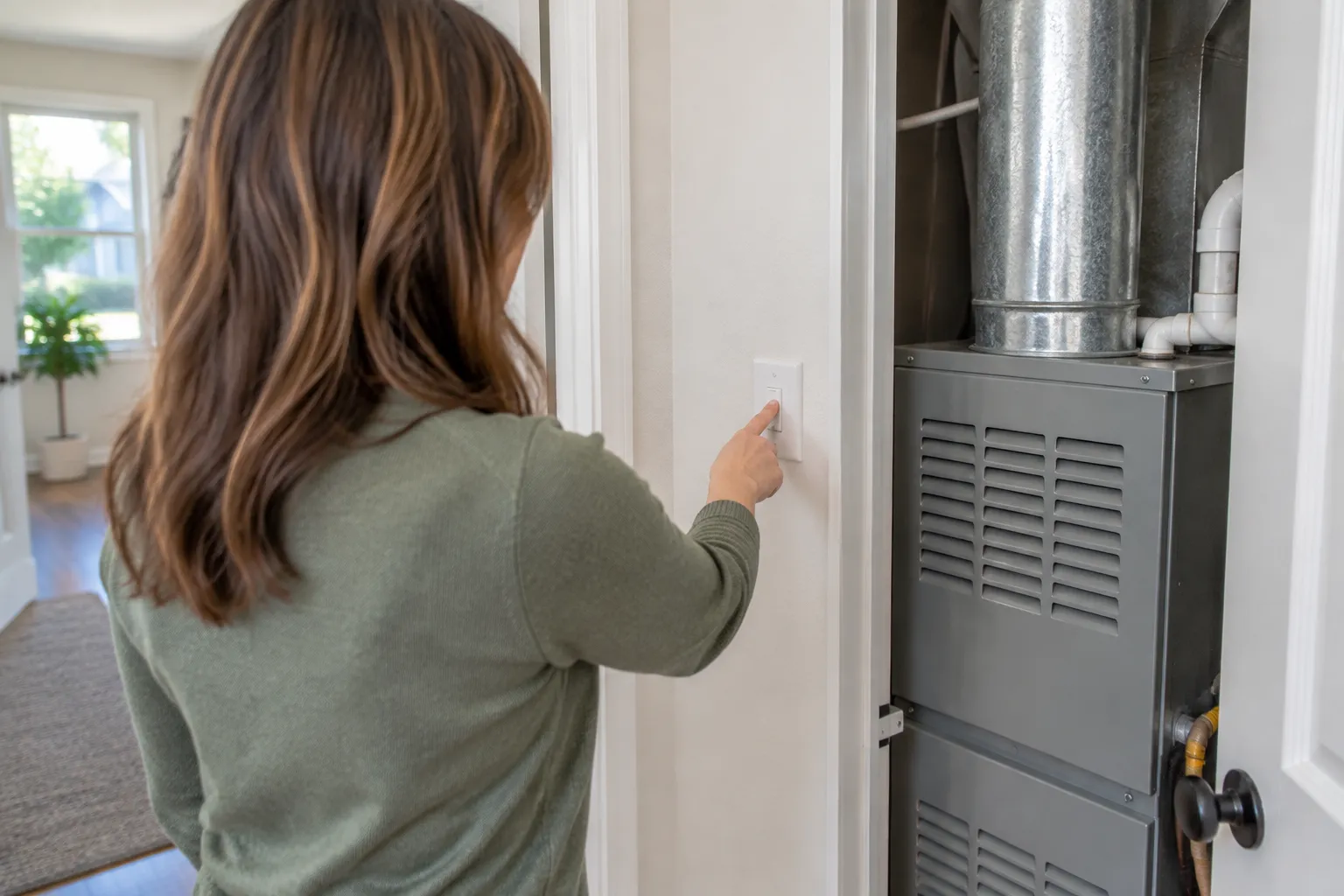
If the furnace is blowing cold air, check whether the thermostat fan setting is on "on" rather than "auto". The fan then runs even when the burners are off, so cool air comes out between heating cycles. If it is on auto and the air stays cold, the burners are probably not lighting.
Some furnaces have a reset button. How it works and when pressing it is a bad idea differs by brand and model, so read the label and see furnace reset first. Do not press it more than once. Repeated lockouts point to a fault such as a flame sensor, ignitor or pressure switch problem, and the furnace needs a diagnosis. Never open the gas valve area, bypass a safety switch or work on the burner yourself.
How much does emergency furnace repair cost?
No published source gives a reliable total for emergency or after-hours furnace repair, so treat any figure you see online with caution and ask each specialist for the price in writing. For comparison, Bob Vila's furnace repair cost guide puts general furnace repair at about $100 to $600, and the part that failed is the biggest factor.
Ask each specialist whether an after-hours charge is a flat fee or an hourly rate, and whether it is added to the normal repair price. A written quote that lists the call-out fee, the labor and the part lets you compare two specialists on the same basis.
What moves the price:
- The time of the call. Nights, weekends and holidays cost more than a weekday visit.
- The part that failed. An ignitor or flame sensor costs far less than a control board, inducer motor or blower motor. A cracked heat exchanger usually means a replacement conversation, not a repair.
- Access and parts. A furnace in a tight attic or crawlspace takes longer. Common parts are often on the truck; rare ones are not.
- Diagnostic or call-out fee. Ask whether it is credited to the repair if you go ahead.
For full ranges by repair type, see furnace repair cost.
What are the signs of a furnace failure in winter?
The common signs are no heat at all, weak heat, cold air from the vents, the furnace cycling on and off every few minutes, loud bangs or grinding, and a gas smell or soot. Some of these are annoyances; a few mean stop using the furnace.
Sacramento's January average low is about 39.2 F, above freezing (NOAA 1991-2020 climate normals, Sacramento Executive Airport). A furnace that has sat unused for months may only show a fault on the first cold week of the season, so it is worth switching it on and checking it before you need it.
Signs by urgency:
- Stop and call for help now: gas smell, carbon monoxide alarm, scorching smell, smoke.
- Call for a visit soon: no heat, cold air, repeated lockouts, loud grinding or squealing.
- Book a normal visit: uneven rooms, a little noise, a furnace that takes a long time to warm the house.
How do I get an emergency furnace repair quote in Sacramento?
Use the quote form to describe the furnace problem and when it started, and a local specialist will get back to you. Say whether the furnace smells of gas, whether a carbon monoxide alarm has gone off, and whether anyone in the home is vulnerable to cold. We do not set response times; the specialist tells you theirs.
Have these ready:
- The furnace make and model from the label inside the door.
- What happened: no heat, cold air, strange noises, error light flashes.
- Whether you have already tried the thermostat, filter and breaker checks.
C-20 is the CSLB classification for warm-air heating, ventilating and air-conditioning work. Ask any specialist for their license number and check it on the CSLB License Check page at cslb.ca.gov. Ask for the call-out fee, hourly rate and any after-hours charge in writing before they start. You can also return to the home page to see the other services we help with.
Questions people ask
How long does furnace repair emergency take?
The time depends on the fault and on whether the part is on hand. A repair that needs a part the specialist does not have with them can mean a second visit. The specialist tells you the timing after diagnosing the furnace, and nobody can promise it for this site, so ask each one before you agree.
What should I ask before I hire someone for emergency furnace repair?
Ask for their California license number, the call-out and hourly fees, any after-hours charge, and whether the price is a firm quote or an estimate. Ask what happens if the repair fails or the part is on order. Get the repair described in writing, with the part named, before work starts.
Do I need to be home for furnace repair emergency?
Yes, an adult usually needs to be home to let the specialist in, show them the furnace and approve the quote and the work. If you cannot be there, ask whether another adult can be present. Never leave a home with a gas smell or a carbon monoxide alarm to wait for anyone; go outside first.
What is the difference between a furnace emergency and a repair I can book later?
A gas smell, carbon monoxide alarm, smoke or burning smell is an emergency that needs you out of the home. A furnace that stopped heating is urgent but not dangerous in itself, unless someone vulnerable is in a cold home. A furnace that is just weak, noisy or inconsistent can usually wait for a normal-hours visit.
Why is my furnace blowing cold air?
The most common causes are the thermostat fan set to on, a clogged filter making the furnace shut down on a safety limit, or burners that are not lighting because of an ignitor, flame sensor or gas supply problem. Check the thermostat and filter first. If the cold air continues, the furnace needs a diagnosis from a specialist.
Where these facts come from
- Consumer Product Safety Commission, Carbon Monoxide Information Center
- Consumer Product Safety Commission, Home Heating Equipment
- California Contractors State License Board
- NOAA 1991-2020 climate normals, Sacramento Executive Airport
- Bob Vila, furnace repair cost
Page updated