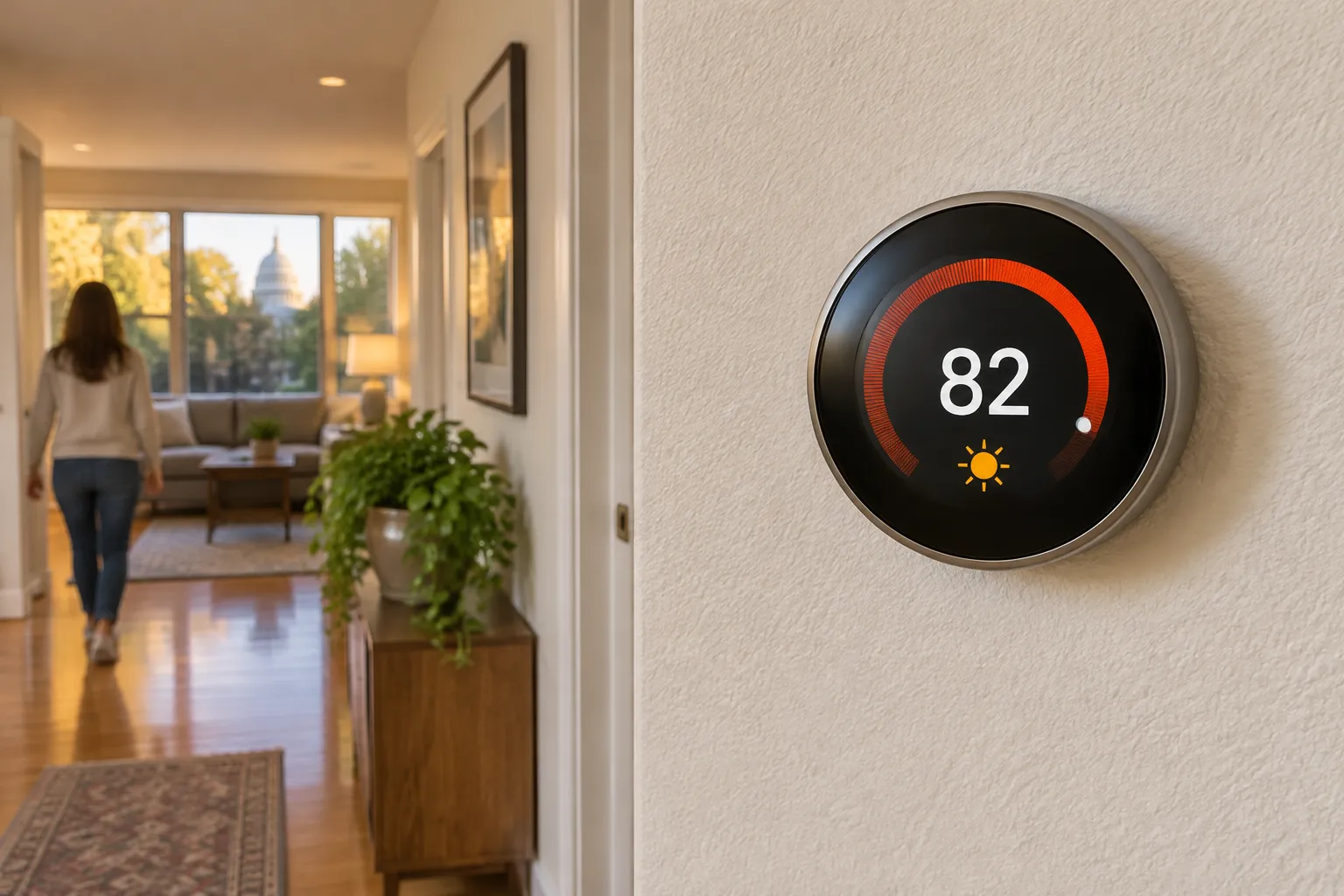
What counts as an emergency HVAC problem?
An emergency is anything that threatens safety or health: a smell of gas, a carbon monoxide alarm, smoke, burning smells, sparks, or no cooling or heat when someone vulnerable is at home. Everything else, such as weak airflow, strange noises or uneven rooms, is a repair to book promptly but not an emergency.
Safety first, repair second:
- Gas smell. Leave the home right away and call 911 from outside.
- Carbon monoxide alarm or symptoms. The Consumer Product Safety Commission says to get outside to fresh air immediately and then call 911 if you suspect poisoning. Headache, dizziness, weakness, nausea, vomiting, sleepiness and confusion are the symptoms it lists.
- Burning smell, smoke or sparks. Turn the system off at the thermostat, leave the area and call 911 if you see smoke or flame.
- Suspected refrigerant leak. Switch the system off and have a specialist look at it before you run it again.
For heat loss, see furnace repair emergency. For summer failures, see AC emergency repair.
What can I try before I call for emergency HVAC service?
Check the thermostat settings and batteries, make sure the breaker and the furnace or air handler switch are on, replace a clogged filter, and clear anything blocking vents or the outdoor unit. These are the safe checks. Opening panels, touching capacitors, gas valves or refrigerant lines is not a DIY job.
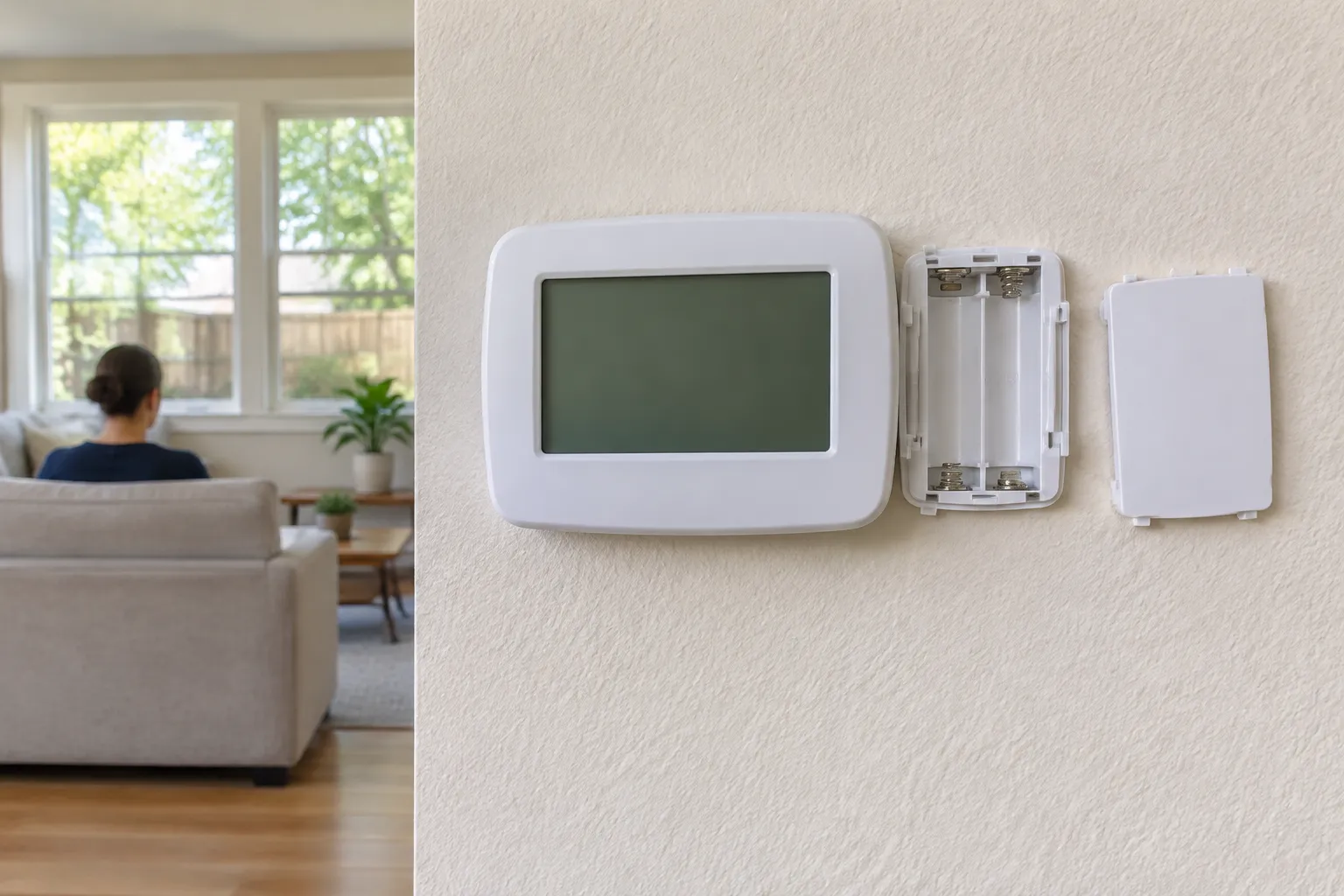
Run through this list in order:
- Thermostat. Set it to heat or cool, lower or raise the target by a few degrees, and replace the batteries if it has them.
- Power. Look for a tripped breaker and a wall switch near the indoor unit. Reset a breaker once only. If it trips again, leave it off.
- Filter. A very dirty filter can make a system shut down or ice up. Replace it if it is clogged.
- Airflow. Open closed vents and clear leaves, weeds and debris from around the outdoor unit.
If none of that helps, a specialist needs to diagnose it. Turn the system off if it is making grinding, screeching or banging sounds, because running it can turn a small repair into a bigger one.
How much does emergency HVAC service cost?
No published source gives a reliable price for emergency or after-hours HVAC service, so treat any figure you see online with caution. For comparison, This Old House puts most HVAC repairs at about $100 to $2,000, depending on the part, and a local specialist quotes the real price after seeing the system.
Ask each specialist how they charge for an urgent call: whether there is a call-out or diagnostic fee, whether labor is at a normal or after-hours rate, and whether parts are listed separately. Get the answers in writing before you approve the work, so you can compare two specialists on the same basis.
What changes the final bill:
- Time of the call. Holidays and the middle of the night cost the most.
- What failed. A tripped safety switch or a clogged condensate drain is a small fix. A compressor, control board or blower motor is a larger one.
- Parts availability. Common parts are often carried by specialists; special orders add time.
- Age of the system. An older system may push the conversation toward replacement.
For pricing by repair type, see HVAC repair cost.
Is 24 hour HVAC repair available in Sacramento?
Some local specialists take after-hours calls and some do not. The quote form lets you flag that your problem is urgent, and each specialist tells you their own hours and response time. We do not promise a same-day visit or any response time on their behalf.
Sacramento summers are hot, with an average July high of about 92.6 F, so a failed AC on a hot day is a real concern for older adults, young children and pets (NOAA 1991-2020 climate normals, Sacramento Executive Airport). The January average low is about 39.2 F, so a failed furnace matters too, and that is above freezing. In either season, ask clearly about hours when you request a quote. For more on night and weekend calls, see 24 hour AC repair.
While you wait, make the home as comfortable as you can without the system: close blinds and use fans in a heat wave, and use extra layers in the cold. Never run a gas oven, a barbecue or a camp stove indoors for heat.
What should I have ready when I ask for emergency HVAC quotes?
Have the make, model and age of the system, a short description of what happened, and what you have already tried. Say if there was a smell, a noise, a tripped breaker or an error light. That means the specialist can often tell you which parts to expect and what the visit may cost before they arrive.
A short checklist:
- The model label from the outdoor unit and the furnace or air handler.
- When the problem started and what you heard or smelled.
- Whether anyone in the home is vulnerable to heat or cold.
- Whether the system is under a manufacturer's or installer's warranty. Check your paperwork before you call.
C-20 is the CSLB classification for warm-air heating, ventilating and air-conditioning work. Ask any specialist for their license number and check it on the CSLB License Check page at cslb.ca.gov. Ask whether the price is a quote or an estimate, and ask what happens if the part is on order. Refrigerant rules are federal: the EPA says technician certification is required to service equipment that could release refrigerant, so ask about that for any job that involves refrigerant.
Questions people ask
How long does emergency HVAC take?
The time depends on the fault and on whether the part is on hand. A part that is not on hand can mean waiting. The specialist tells you the likely timing after seeing the system. Ask for it up front, along with what you can do to stay comfortable in the meantime.
What should I ask before I hire someone for emergency HVAC?
Ask for their California license number, the call-out fee, the hourly rate, the after-hours surcharge and when they can arrive. Ask whether the price is fixed or an estimate, and what is covered if the repair does not fix the fault. Get the diagnosis and parts in writing before you approve the work.
Do I need to be home for emergency HVAC?
Yes, an adult usually needs to be home to let the specialist in and approve the quote and the work. If you are away, ask another adult to be there. If you smell gas or a carbon monoxide alarm sounds, go outside and call 911 instead of waiting inside.
Is emergency HVAC service more expensive?
It can be, because some businesses charge differently for nights, weekends and holidays. No published source gives a reliable figure, so ask each specialist for their after-hours charge in writing. If your problem is not a safety issue and it is mild enough to manage, a normal-hours visit lets you compare quotes without the time pressure.
Can a dirty filter cause an emergency?
A very clogged filter can make a furnace shut down on a safety limit or an AC freeze up. It is the cheapest cause to check and fix. Replace it before you call, and mention it to the specialist if the problem continues afterward.
Every service and price guide is on HVAC repair in Sacramento.
Where these facts come from
- Consumer Product Safety Commission, Carbon Monoxide Information Center
- EPA, Purchasing and Repairing Home Air Conditioners or Heat Pumps
- California Contractors State License Board
- NOAA 1991-2020 climate normals, Sacramento Executive Airport
- This Old House, HVAC maintenance cost
- EPA, Technicians and contractors frequent questions
Page updated