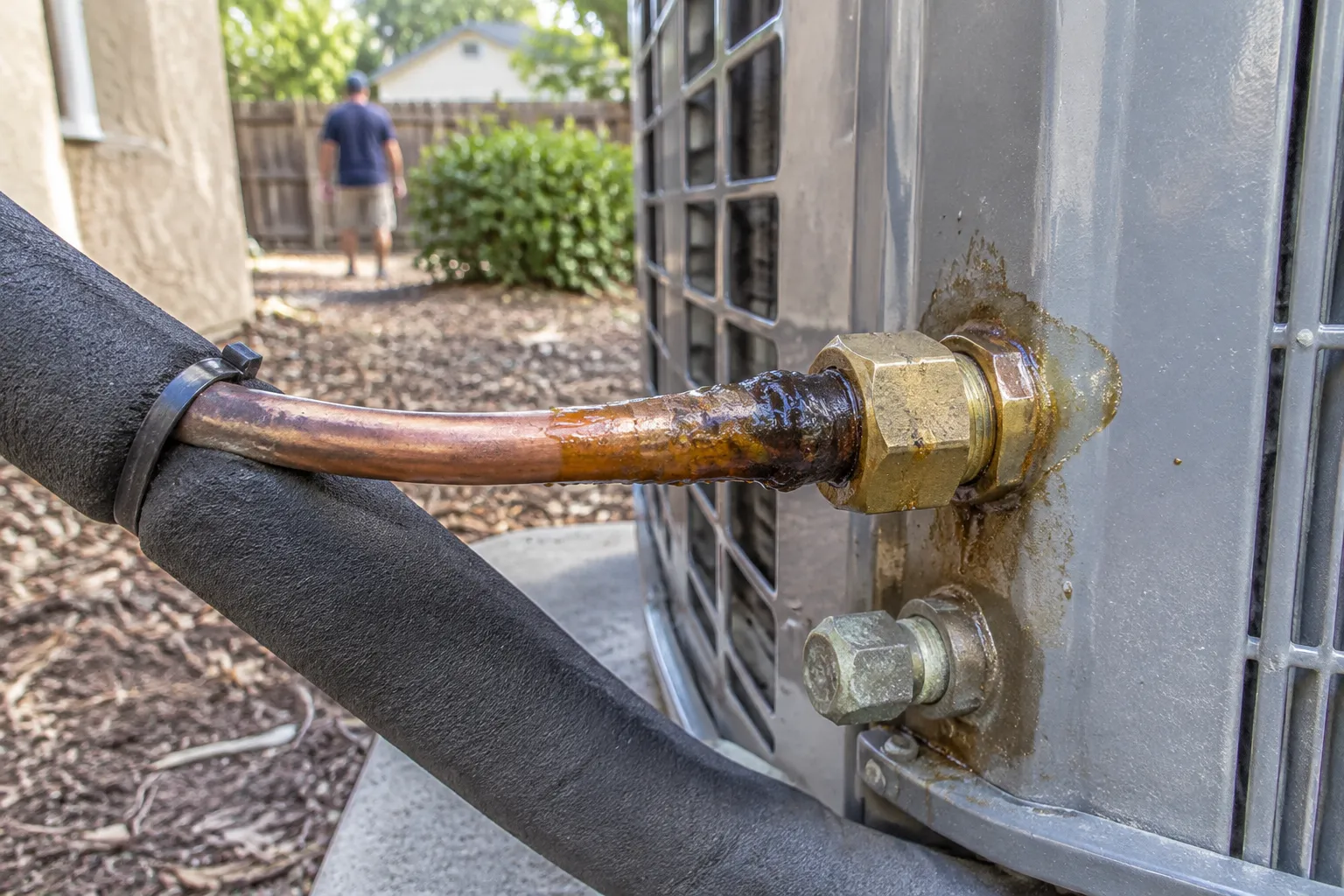
How do I know if my AC is low on refrigerant?
The typical signs are warm or weak air from the vents, an AC that runs constantly without cooling the house, ice on the indoor coil or on the copper line outside, a hissing or bubbling sound, and higher electric bills. These signs also appear with other faults, so a technician needs to measure before saying it is refrigerant.
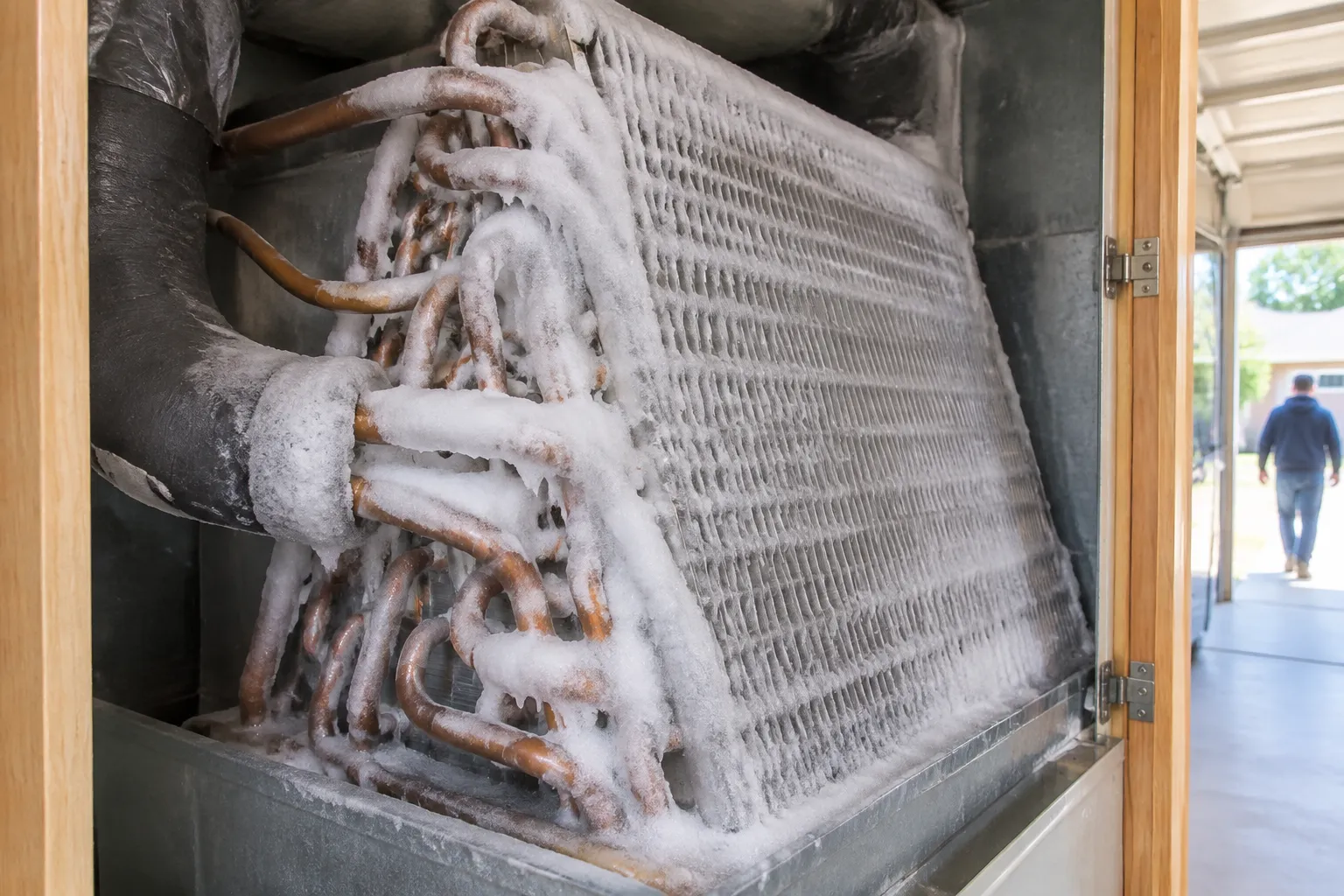
Watch for:
- Warm or lukewarm air from vents while the outdoor unit is running. Our guide on AC blowing warm air lists other causes.
- Ice or frost on the refrigerant line or on the indoor coil. See AC system freezing up.
- Longer cooling cycles and a house that takes longer to cool.
- Hissing or bubbling near the indoor or outdoor unit.
- A rise in the energy bill with no change in how you use the AC.
A system low on refrigerant works harder and cools less well, so have the charge checked by a technician. Check the filter and make sure the outdoor unit is not blocked, because those cause the same symptoms. Do not open panels or touch refrigerant lines yourself.
How do I know if my AC just needs Freon?
You cannot tell by looking or feeling. A technician uses gauges and temperature readings to confirm a low charge, and then finds out why it is low. Because refrigerant is in a sealed loop, a system that needs more has almost always leaked. Adding refrigerant without repairing the leak means you pay again later.
The EPA asks homeowners to request that service technicians find and repair the leak rather than topping off the system. Repairing leaks keeps the system performing well and cuts refrigerant emissions and energy use. Ask any specialist how they will locate the leak and whether the leak search is priced separately from the repair.
"Freon" is a brand name that people use for refrigerant in general. The refrigerant type is printed on the outdoor unit label. Ask the specialist which one your system uses and what it costs. The refrigerant R-134a that appears in searches may not be what your system uses, so check your own label rather than assuming.
Is refrigerant harmful to humans?
Treat a suspected refrigerant leak indoors with caution. Leave the area, keep people and pets away, and open doors and windows if you can do so safely. If anyone feels unwell, see a doctor or call 911. Do not try to find or fix the leak yourself, because refrigerant work needs a trained specialist with the right equipment.
Do not try to find or stop a leak by hand. Refrigerant leaks are also bad for the environment, which is why federal rules cover how technicians handle it. Section 608 of the Clean Air Act prohibits intentionally venting refrigerants such as HFCs during maintenance, service, repair or disposal of air conditioning equipment.
Is coolant and Freon the same thing?
No. Coolant usually means the antifreeze that circulates in a car engine, while Freon is a brand name that has become shorthand for the refrigerant in an air conditioner. They are different fluids in different systems. Your home AC has a sealed refrigerant loop and no coolant tank to top up.
The words get mixed up in searches. A car AC and a home AC are different systems and use different charging equipment, so advice for one does not carry over to the other. Home AC refrigerant is a regulated substance and work on it is done by a technician with the right gauges and recovery equipment, not with a can and a hose.
Will AutoZone recharge my AC?
Auto parts stores sell refrigerant for cars, and some stores or shops can service vehicle AC. A home AC is a different system, and refrigerant for it is regulated. EPA says that Section 608 certification is required to recharge appliances, and a car recharge kit is not a suitable way to charge a home unit.
Call a local HVAC specialist for the home system. If you are asking about a car AC, that is a separate kind of repair that this site does not cover.
How much does HVAC leak repair cost?
Fixr's air conditioner repair cost guide puts refrigerant leak repair at about $200 to $1,500, with an average near $800, and a refrigerant recharge at about $100 to $600. Where the leak is, and how hard it is to reach, affects the price. A local specialist quotes the real total.
| Item | Typical range |
|---|---|
| Leak repair, whole job | $200 to $1,500 (average near $800) |
| Refrigerant recharge | $100 to $600 |
Leak detection and the diagnostic visit are not priced in the guide used here, so ask for them as separate lines on a written quote.
What moves the price:
- Where the leak is. Lines and fittings are cheaper than coils.
- Refrigerant type. Supply of some refrigerants is limited, so price can vary. Ask the specialist which type your system uses.
- Amount of refrigerant and how long it took to find the leak.
- Access. A coil in a tight closet or attic costs more labor.
- System age. If the leak is in an old coil, the specialist may price a coil or system replacement. Read AC recharge cost for recharge pricing.
If water is leaking instead, that is a different problem: see AC water leaking.
Questions people ask
How much does it cost to put Freon in your home AC unit?
A refrigerant recharge is listed at about $100 to $600, but a recharge alone is not a repair if there is a leak. The specialist should find and fix the leak first, and leak repair is listed at $200 to $1,500. Ask for the leak search and the repair separately on the quote.
Can I recharge my AC Freon myself?
No. EPA says Section 608 certification is required to recharge appliances, so a recharge is a technician's job. Home recharge kits and DIY attempts can overcharge the system, damage the compressor and release refrigerant illegally. Call a local specialist instead.
How long does a refrigerant leak repair take?
The time depends on where the leak is and how hard it is to reach, and replacing a coil takes longer than fixing a line. The specialist tells you the timing after the diagnosis. Ask whether the price includes the leak search and the recharge.
What should I ask before I hire someone for refrigerant leak repair?
Ask for their California license number and check it on the CSLB License Check page at cslb.ca.gov; C-20 is the CSLB classification for warm-air heating, ventilating and air-conditioning work. Ask whether the technician has EPA Section 608 certification, how they will find the leak, and what the written quote includes. You can return to the home page for other services.
Is a refrigerant leak dangerous?
Treat any suspected leak indoors with caution. Leave the area, ventilate it if you can do so safely and call a specialist. If anyone feels dizzy or short of breath, see a doctor or call 911. Keep children and pets out of the room until a specialist has checked it.
Read on
- AC recharge cost
A home AC recharge typically costs $100-600 in a published guide.
- AC water leaking
Water leaking from your AC unit indoors? Learn the usual causes, what is safe to check, why refrigerant is not the leak and when to call a…
Where these facts come from
Page updated