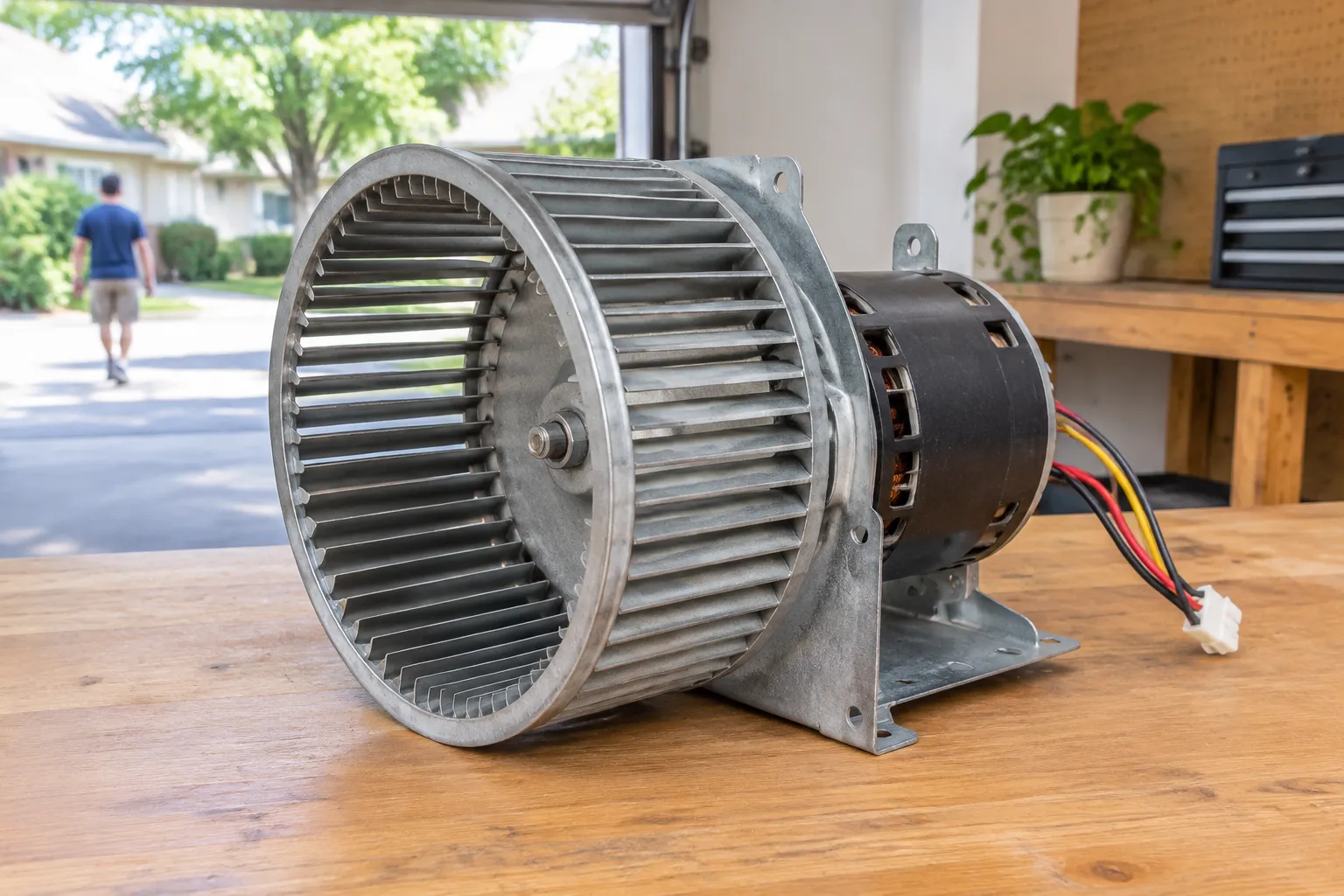
How do you know if the blower motor is failing?
Signs include no air from the vents while the furnace seems to run, weak airflow, loud squealing, grinding or rattling, a burning smell, or a furnace that shuts off after heating for a short time. Some failures are the motor itself, but a failed capacitor, a worn belt on older models or a clogged filter can cause the same symptoms.
A blower that will not run can let the furnace overheat, and the furnace then shuts off through a safety switch. That is why you may notice the burners light, a few minutes pass and everything stops. If you smell burning, switch the furnace off. Do not keep restarting it. A specialist tests the capacitor and the motor before recommending a replacement, since the capacitor is a cheaper part. See the blower motor replacement cost guide and the capacitor replacement cost guide.
What does blower motor repair cost?
Bob Vila's furnace blower motor replacement cost guide puts the job at roughly $250 to $900, with an average near $515. The motor type, the labor to reach it, the brand and whether other parts are damaged all affect the total. A local specialist quotes the real price.
| Part | Typical range |
|---|---|
| Blower motor | $250-900 |
| Control board | $300-650 |
| Gas valve | $200-800 |
| Heat exchanger | $1,000-3,000 |
Ask each specialist whether the quote covers only the motor or the full blower assembly, and whether it includes testing the capacitor. If the motor is on an older furnace, ask for a replacement quote as well. Flame sensors and igniters are not priced in the guides used here, so ask for a written quote for them. Our guide to furnace repair cost explains how the age of the furnace changes the decision.
What is a flame detector?
A flame detector is a sensor that confirms a flame is present and triggers a safety response if it is not. In a household gas furnace, the flame detector is usually a flame sensor, a thin metal rod that the control board uses to check that the burner is lit. If it cannot detect flame, the board shuts the gas valve to prevent gas building up.
That makes the sensor a safety part, and it should never be bypassed or disconnected. Carrier's guidance is explicit that it is a safety component and that running a furnace without it risks gas accumulation. When it fails, the symptoms are usually that the burner lights, runs for a few seconds and shuts off, sometimes repeating until the furnace locks out.
What are the different types of flame sensors?
Flame detectors come in several types: optical, ionization (flame rod) and thermocouple. Most modern gas furnaces use a flame rod, which senses flame through a tiny electrical current passing through it, a method called flame rectification. Older furnaces with a standing pilot light usually use a thermocouple that shuts the gas if the pilot goes out.
In practice, you do not choose the type. It is set by your furnace model, and replacement parts are not universal. A specialist matches the part to the model number on the furnace label. A hot-surface igniter, which glows to light the burner, is a separate part, and a failed one can look like a sensor problem. See furnace ignitor replacement for how that repair goes.
What does a flame sensor look like on my furnace?
A furnace flame sensor is a thin metal rod, usually bent, held by a white ceramic (porcelain) insulating collar and attached to a bracket at the burner assembly. It sits in the path of the burner flame and connects by a wire to the control board. Because the burner area is behind a panel, you may not see it without opening the furnace.
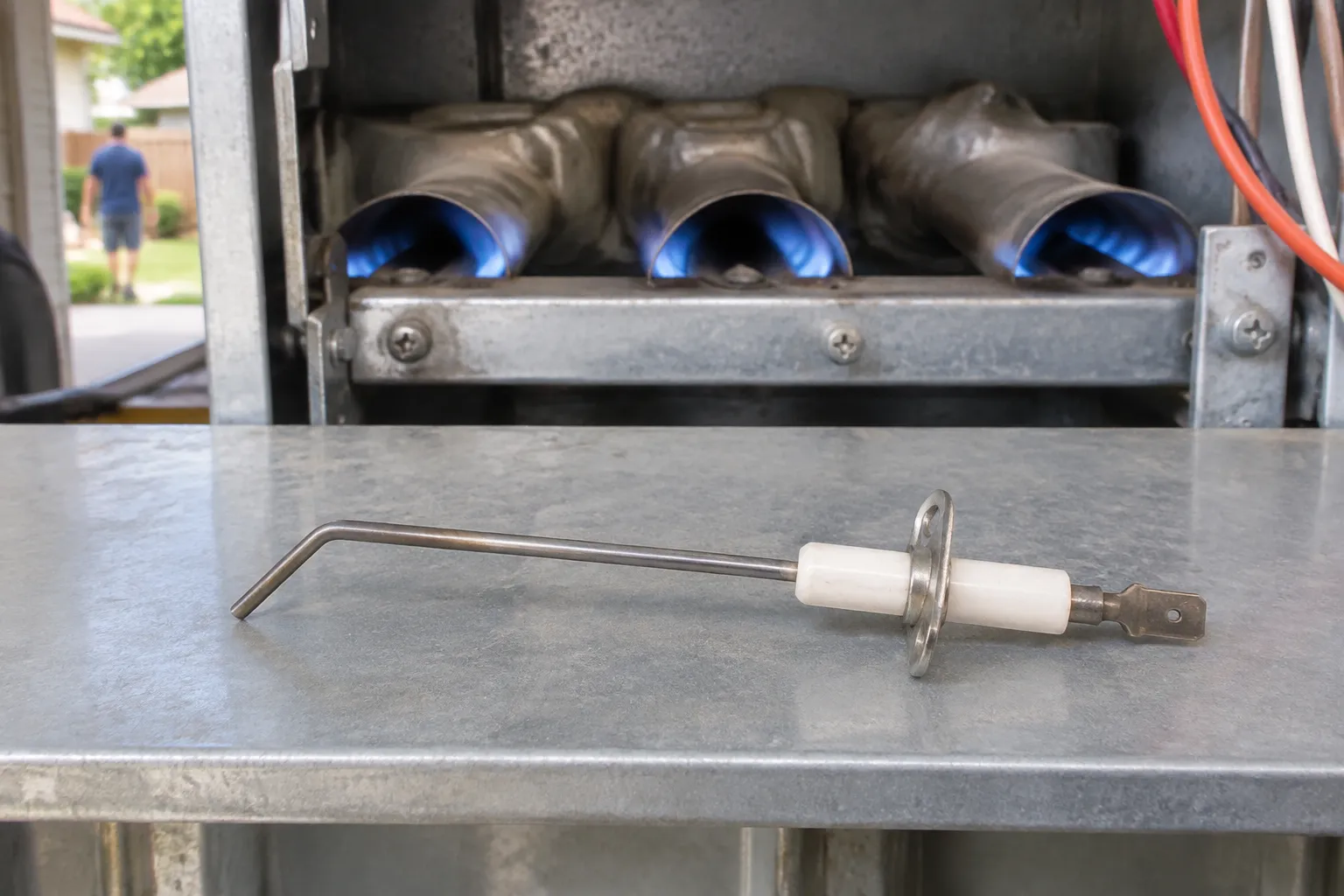
Do not open the burner area yourself. Furnace burner compartments involve gas, high heat and electrical parts, and Carrier advises that cleaning or removing the sensor be done by a trained HVAC professional. If you want to know where it is on your model, check the owner's manual or ask the specialist to show you during a visit. The furnace flame sensor guide has more detail.
How do I know if my furnace flame sensor is bad?
The most common sign is a furnace that ignites, runs for a few seconds and shuts off. Others include short cycling, a glowing igniter with no heat, a fault code on the control board and a furnace that locks out and needs a manual reset. Many of these also match an ignition, wiring, grounding or gas supply fault.
Carbon buildup on the rod is the most common cause. It insulates the rod so the board cannot detect a flame that is actually there. A cracked ceramic collar or a bent rod can also fail it. A specialist confirms the cause, which may be cleaning or replacement of the part. Ask for the flame sensor price as a line on a written quote. If the sensor keeps failing, other causes, such as the control board or the pressure switch, may be involved.
Can a heat exchanger be replaced?
Yes, a heat exchanger can be replaced, but it is one of the costliest furnace repairs, at roughly $1,000 to $3,000 according to American Standard Air. Many people compare that with the cost of a new furnace, particularly when the furnace is older. A cracked heat exchanger is a safety issue because it can let combustion gases mix into your home's air.
The heat exchanger is the metal chamber that transfers heat from the burner flame to the air your blower pushes through the ducts. If a specialist finds a crack, ask for the finding in writing, plus both a repair and a replacement quote. The CPSC advises alarms on every level and outside sleeping areas, and if an alarm sounds, go outside and call 911. Symptoms include headache, dizziness, weakness, nausea and confusion, and anyone affected should see a doctor. See furnace heat exchanger repair.
Questions people ask
Where is the flame sensor on a gas furnace?
On a gas furnace the flame sensor is a metal rod located on the burner assembly, close to where the flame burns. The exact position varies by model, so use the owner's manual or ask a specialist. Do not open the burner compartment yourself.
How do you clean a furnace flame sensor?
The safest way is to have a trained HVAC specialist do it, as Carrier advises. They shut off the furnace and power, remove the sensor, gently clean the rod, refit it and test a full heating cycle. If cleaning does not help, the sensor needs replacing. Never bypass or defeat the sensor to get heat.
How much should it cost to replace a flame sensor on a furnace?
No sourced price range exists for this part, so ask for a written quote. Cost depends on the furnace model, how easy it is to reach and the service fee. A local specialist quotes the real price. Ask whether the quote includes the diagnosis and the new part.
Is it safe to run a furnace with a bad blower motor?
No. Without proper airflow the furnace can overheat, and a safety switch will shut it off. A failing motor can also overheat itself and, in rare cases, cause a burning smell or smoke. Switch the furnace off at the thermostat and the furnace switch, and call a specialist. Do not remove safety switches or panels to keep it running.
Does a pilot light need to be relit when the blower fails?
Not usually. Most modern furnaces use an electronic igniter rather than a standing pilot light, and a blower fault does not put out a pilot. If your furnace does have a pilot light and it keeps going out, that is a separate fault. Do not relight a pilot you are unsure about. If you smell gas, leave the home and call 911 from outside.
Read on
- Blower motor replacement cost
HVAC blower motor replacement price range, plus costs for a control board, gas valve and other furnace parts, with tips on what changes…
- Furnace control board repair
What a furnace control board does, signs it is failing, what replacement costs ($300-650 typical) and how to get quotes from local…
- Furnace flame sensor
What a furnace flame sensor does, how to tell if it is failing, where it sits, why some furnaces use a pilot light instead, and typical…
- Furnace gas valve repair
What a furnace gas valve does, why it fails, what repair or replacement costs ($200-800 typical) and why this is a job for a local…
- Furnace heat exchanger repair
A cracked furnace heat exchanger is a carbon monoxide risk.
- Furnace ignitor replacement
Why a furnace ignitor fails, signs the furnace will not light, what replacement can cost, and what to ask a local Sacramento specialist.
- Furnace inducer motor repair
What a furnace inducer motor does, the signs it is failing, why the furnace will not start, what repair can cost, and when to call a local…
- Furnace pressure switch repair
How a furnace pressure switch works, why the furnace will not light, the common causes and what a repair can cost, and when to call a…
See HVAC repair across Sacramento for the other services and what they cost.
Where these facts come from
Page updated