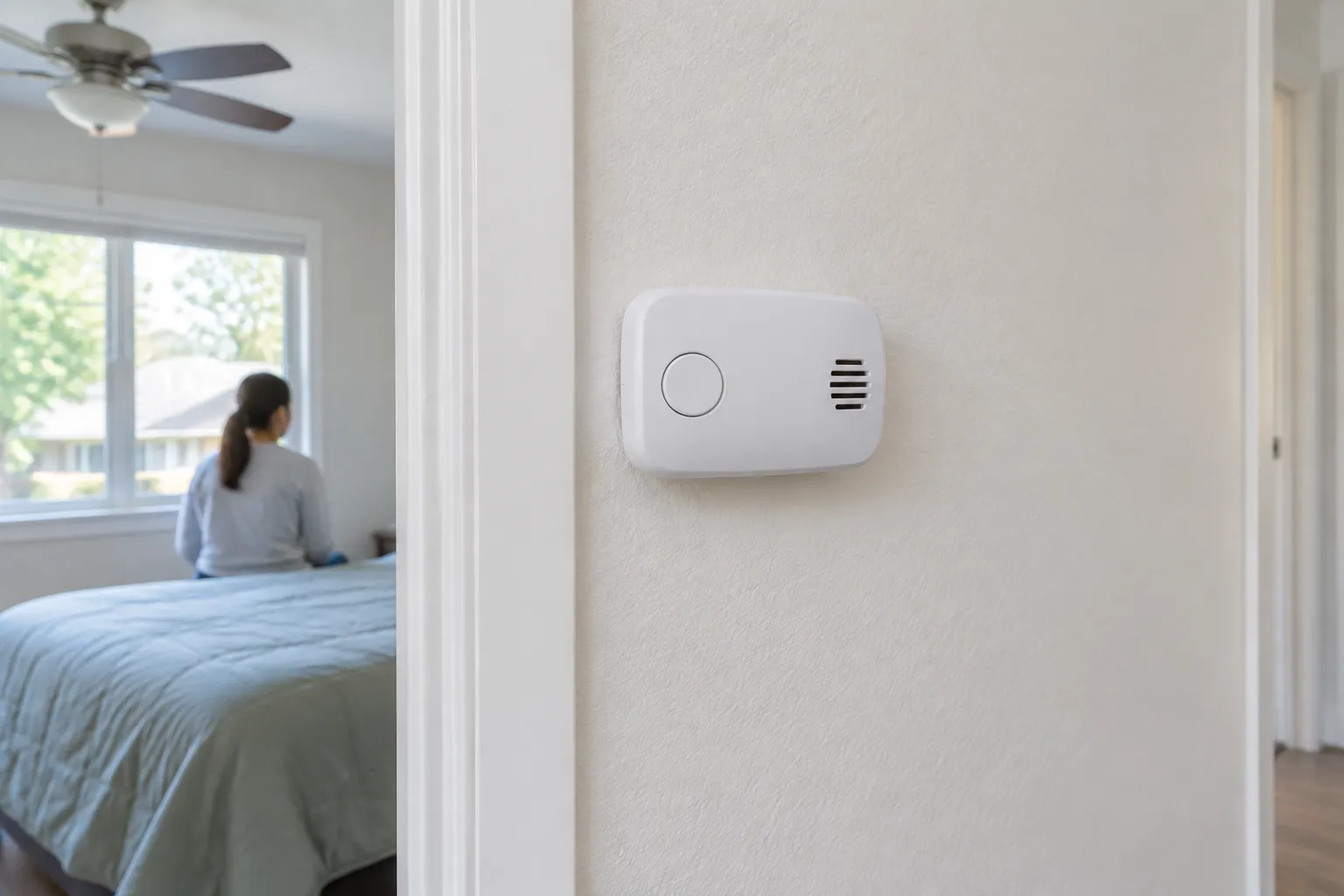
What should I do if my carbon monoxide alarm goes off?
Move outside to fresh air right away and call 911 or the fire department. The Consumer Product Safety Commission says not to try to find the source, and not to go back in until emergency responders say it is safe. Take everyone with you, including pets if you can do so quickly, and do a head count outside.
After responders clear the home:
- Do not run the furnace until a specialist has found the cause.
- Tell responders if anyone felt unwell, and see a doctor if you or anyone else had symptoms. Carbon monoxide poisoning needs medical care.
- Ask a local specialist to inspect the furnace and the vent. See furnace repair emergency if the furnace is your only heat.
If you smell gas, leave the home and call 911 from outside.
Can a furnace cause carbon monoxide?
A gas furnace can, if something is wrong. Carbon monoxide forms when fuel burns without enough air. The Consumer Product Safety Commission says it is produced by the incomplete burning of fuels, including oil, kerosene, propane and natural gas. A furnace that burns normally sends its exhaust outside through the vent. Problems arise when that exhaust cannot leave, or when the furnace itself is faulty.
Common causes a specialist looks for:
- A blocked or loose vent or flue. CPSC advises checking chimneys and flues for blockages and loose connections.
- A damaged heat exchanger. A crack can let combustion gases mix with the air your home breathes. See furnace heat exchanger repair.
- Poor combustion. Dirty burners or poor airflow can cause incomplete burning.
- A furnace that has gone too long without service. The CPSC advises a yearly professional inspection of fuel-burning heating systems.
Many furnace problems never involve carbon monoxide. A furnace that blows cold air or shuts off is far more often a simple fault. The risk is that you cannot see or smell carbon monoxide, so alarms and yearly checks matter.
Does an electric furnace produce carbon monoxide?
An electric furnace does not burn fuel, so it does not produce carbon monoxide itself. Carbon monoxide comes from burning fuel, such as gas, oil, wood or charcoal. But a home with an electric furnace can still have other sources, such as a gas water heater, a gas stove or an attached garage. An alarm on every level is still a good idea.
If your alarm sounds in a home with an electric furnace, treat it the same way: go outside and call 911. Do not assume the furnace is not the cause, and do not assume it is. The responders will check.
What are the signs of carbon monoxide from a furnace?
Symptoms can look like the flu without the fever. The CDC lists headache, dizziness, weakness, upset stomach, vomiting, chest pain and confusion. The Consumer Product Safety Commission adds fatigue and shortness of breath. Symptoms that improve when you leave the house, or that affect several people at once, point to carbon monoxide.
Patterns that should make you act:
- Symptoms that ease when you leave the house and return when you come back.
- Several people or pets in the home unwell at the same time.
- Symptoms that start soon after the heating comes on.
- Any alarm sounding, even if you feel fine.
Symptoms alone do not prove a leak, and feeling fine does not prove you are safe. The CDC warns that people who are asleep or drunk can die before they have symptoms. Do not rely on your senses. Use alarms.
Where should carbon monoxide alarms go?
Install battery-operated or battery backup alarms on every level of the home and outside sleeping areas. The Consumer Product Safety Commission says to avoid spots near heating vents or where furniture or drapes could cover the alarm. It does not recommend alarms in kitchens or directly above fuel-burning appliances. Test the alarm on a schedule and replace it when the maker says to.
What does a furnace carbon monoxide inspection involve?
A specialist inspects the furnace, burners, heat exchanger and vent, checks combustion and airflow, and tests for carbon monoxide at the furnace and in the home. The goal is to confirm that the furnace burns cleanly and that exhaust leaves safely. ENERGY STAR lists a heat exchanger and gas pressure checks, burner combustion and gas connections as part of a yearly tune-up.
What to ask for:
- A written report of what was checked and what was found.
- A clear statement of whether the furnace is safe to run.
- A written quote for any repair, separate from the inspection.
- Whether the work is part of regular HVAC maintenance.
Gas furnace work is not a DIY job. Do not open panels, adjust burners or touch gas connections. C-20 is the CSLB classification for warm-air heating, ventilating and air-conditioning work. Ask any specialist for their license number and check it on the CSLB License Check page at cslb.ca.gov.
Questions people ask
How long does a furnace carbon monoxide check take?
The time depends on the furnace, how easy it is to reach and whether anything needs repair. A local specialist gives a time estimate when you ask for a quote, and a repair adds to it. Ask whether a carbon monoxide test of the home is part of the visit.
What should I ask before I hire someone to check my furnace for carbon monoxide?
Ask for their license number and check it on the CSLB License Check page. Ask what the inspection covers: heat exchanger, vent, burners, combustion and a carbon monoxide test. Ask for a written report and a separate written quote for any repair. If a quote recommends replacing the furnace, get a second opinion before you commit.
Do I need to be home for the check?
Yes, usually. A specialist needs access to the furnace and the vent, and may need to enter several rooms to test the air. If anyone in the home has had symptoms, tell the specialist and see a doctor. Do not wait for the appointment if an alarm has gone off: leave and call 911 first.
How often should a gas furnace be inspected?
The Consumer Product Safety Commission advises having the heating system professionally inspected and serviced yearly. ENERGY STAR suggests checking heating in the fall. Contractors get busy once winter arrives, so book early. Our furnace repair page explains what else a specialist may find during a visit.
Can a carbon monoxide alarm go off when the furnace starts?
It can, and it should be taken seriously. Treat any alarm as real: go outside and call 911 first. After responders clear the home, ask a local specialist to inspect the furnace and vent before you use it again. Do not silence the alarm and carry on.
See Sacramento HVAC repair for the other services and what they cost.
Where these facts come from
Page updated