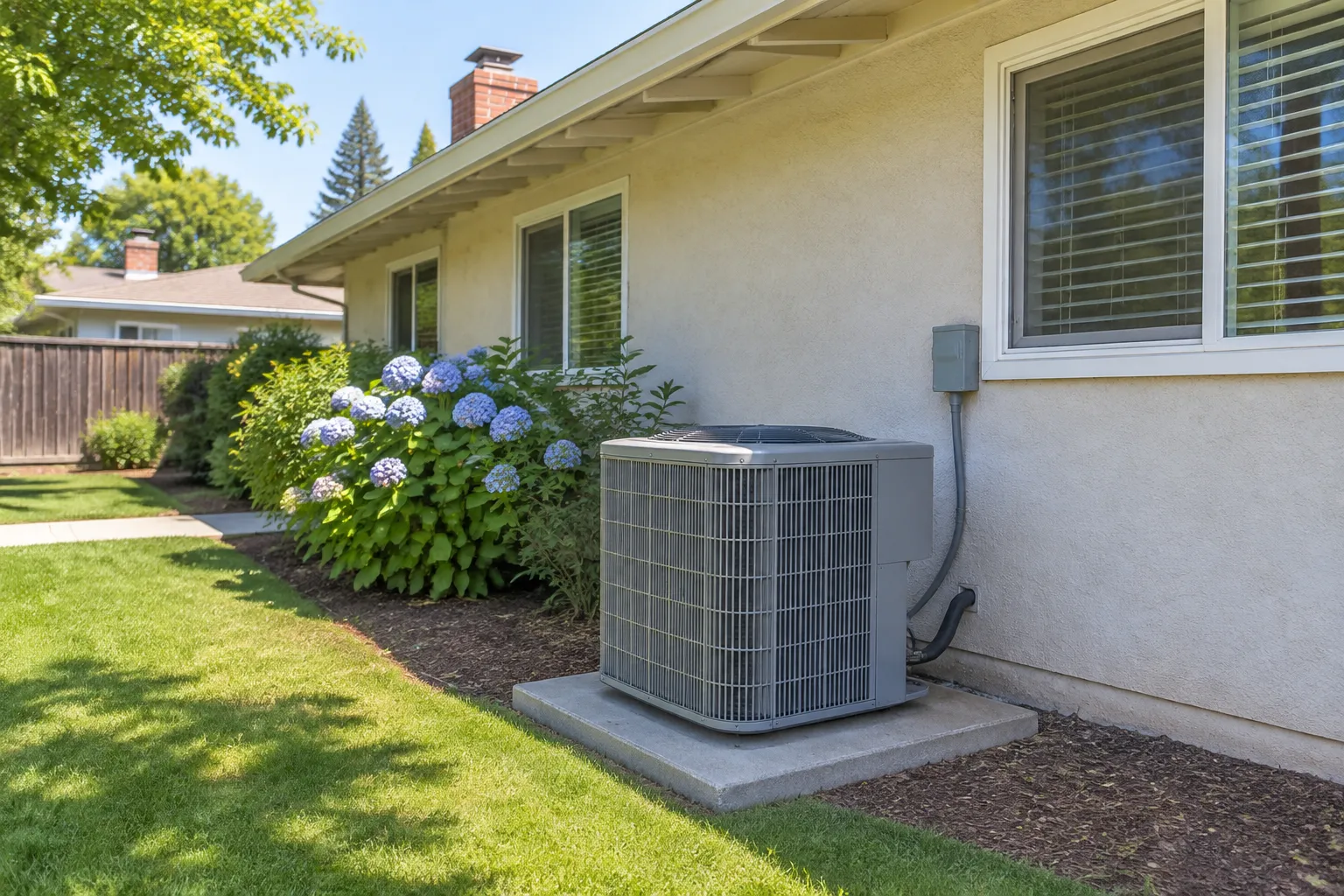
Does HVAC fix air conditioning?
Yes. Heating, ventilation and air conditioning are usually handled by the same kind of local specialist, so the business that services a furnace often repairs air conditioning too. C-20 is the CSLB classification for warm-air heating, ventilating and air-conditioning work. Ask any specialist for their license number and check it on the CSLB License Check page at cslb.ca.gov.
Specialists work on the whole air conditioning system: the outdoor condenser, the indoor coil, the blower, the thermostat, the wiring and the refrigerant circuit. A repair call usually starts with a diagnosis, because several faults look alike from the living room. A unit that runs but blows warm air, for example, can point to a failed capacitor, a dirty coil, a refrigerant leak or a tripped safety switch.
What is the 3 minute rule for AC?
The 3 minute rule is a guideline to wait about three minutes after your ac unit shuts off before turning it back on. The pause lets pressure inside the system settle so the compressor does not start against a load. Many newer units have a built-in delay, and older ones may not, so the wait is a cheap habit.
Waiting does not fix a unit that keeps switching itself off. If your ac system turns on and off every few minutes, that is short cycling, and it points to a fault such as a failing capacitor, a dirty coil or a thermostat problem. Switch the system off at the thermostat and ask a specialist to look at it rather than restarting it again and again.
What is the $5000 rule for AC?
The $5,000 rule is a repair-or-replace shortcut: multiply the repair estimate by the age of your air conditioner in years. If the result is above $5,000, replacing the system usually makes more financial sense than repairing it. A related guide is the 50 percent rule, which says to consider replacement when a repair costs more than half of a new system.
Take an example. A $500 repair on a 12-year-old unit gives $6,000, which is over the line. The same repair on a 6-year-old unit gives $3,000, so repair is the usual choice. These are rules of thumb, not laws. Ask each specialist to put the repair and replacement options in writing so you can compare. For typical lifespans, see how long an AC lasts.
What does AC repair cost?
Fixr's air conditioner repair cost guide puts a typical AC repair at $250 to $700, with an average around $375. Where your job lands depends on the part, the age and type of the unit, the labor rate and when you call. A local specialist quotes the real price after seeing your system.
| Repair | Typical range |
|---|---|
| Capacitor replacement | $100-400 |
| Refrigerant leak repair | $200-1,500 |
| Compressor replacement | $600-3,000 |
| Programmable thermostat replacement | $85-300 |
Ask each specialist whether there is a service or diagnosis fee, and whether it is credited toward the repair if you go ahead. Evenings, weekends and holidays may be priced differently, so ask for the after-hours rate in writing; the AC emergency repair page covers that situation. For a deeper breakdown by part, see the AC repair cost guide.
What can you check before you call for AC repair?
Start with the simple items: the thermostat, the filter, the breaker and the vents. Set the thermostat to cool and a few degrees below room temperature, replace batteries if it has them, and check that the filter is not clogged. Look at the breaker panel for a tripped breaker, and make sure supply vents and the outdoor unit are not blocked by furniture, leaves or debris.
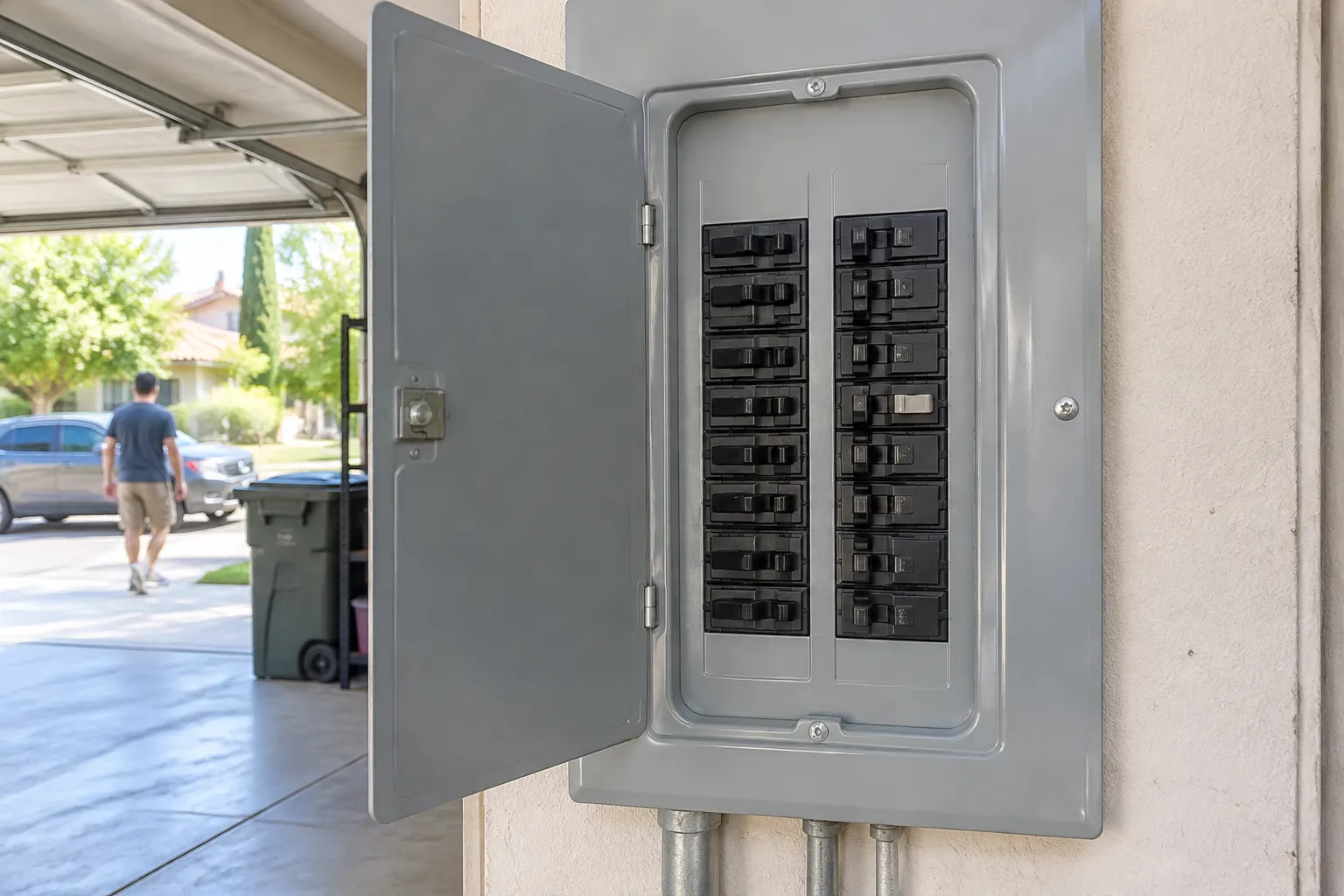
ENERGY STAR advises checking the filter once a month, and a dirty filter can lead to higher energy costs and early equipment failure. Stop at that point. Do not remove panels, touch the capacitor or handle refrigerant. If you see ice on the indoor line, a burning smell or sparks, switch the system off at the thermostat and the breaker and call a specialist. Our guides on AC blowing warm air, an AC running but not cooling and an AC system freezing up walk through what each symptom usually means.
Is keeping AC at 72 good?
A setting of 72 degrees is fine for comfort if your ac unit can hold it, but it costs more to run than a higher setting because the system works harder for a bigger gap between indoor and outdoor temperature. Sacramento summers are hot: the July average high is about 92.6 F (NOAA 1991-2020 normals, Sacramento Executive Airport).
On the hottest afternoons, some systems struggle to hold 72, and that alone does not mean something is broken. There is no official rule for how far below the outdoor temperature a system should hold. A more useful check is the air itself: air from the supply vents should feel clearly cooler than the air in the room. If your house stays well above the thermostat setting for hours, the system may be undersized, low on airflow or faulty, and a specialist can say which.
Does HVAC repair AC?
Yes, HVAC specialists repair AC. They repair or replace parts such as capacitors, contactors, fan motors, coils and thermostats, and they find and fix refrigerant leaks. Refrigerant rules are set federally by the EPA, which prohibits intentionally venting refrigerant to the air, so that part of the job is for a trained specialist and not a do-it-yourself task.
Some jobs go beyond a repair. A failed compressor is one of the costlier repairs, and a unit that needs repeated repairs may be worth comparing against a replacement quote. Ask the specialist to explain the cause, the part, the labor and any warranty on the part before you agree to work. Parts differ by maker, so give the specialist the brand and model number on the outdoor unit label.
How do you choose a specialist and get quotes?
Ask at least two or three local specialists for a written quote that names the part, the labor and any service fee. C-20 is the CSLB classification for warm-air heating, ventilating and air-conditioning work. Ask each specialist for their license number and check it on the CSLB License Check page. Compare the scope, not just the total.
Useful questions: What is the diagnosis fee, and is it credited if you go ahead? Is the quote for repair only, or does it include related parts? How long does the part take to arrive? Does the quote change if the problem is different on arrival? You can send one request through our quote form and a local specialist will get back to you. This site helps you ask for quotes. It does not do the repair itself.
Questions people ask
What are the most common AC parts that fail?
The capacitor, the contactor, the fan motor and the thermostat fail often, because they work hardest every time the unit starts. Capacitors help motors start and typically cost $100 to $400 to replace. Refrigerant leaks and compressor failures are less common but cost more. A specialist tests the electrical parts first because they are cheaper to fix. See the capacitor replacement cost guide for details.
What are the worst AC units to buy?
There is no reliable public ranking of worst brands, so treat any list you read with caution. Reliability depends on correct sizing, installation quality and maintenance as much as on the badge. When you shop, ask local specialists which units they see fewer problems with, compare warranties in writing and check the efficiency rating. Do not rely on a single review or a forum post.
How cool should my house be if it's 100 outside?
There is no official number. On a very hot day a system runs longer and may not reach a low setting, and that can be normal. The warning sign is a house that stays far above the setting for hours, or air at the vents that feels only slightly cooler than the room. In that case ask a specialist to check airflow, the coils and the refrigerant charge.
Which part of AC is costly?
The compressor is usually the costliest part, with replacement commonly quoted at $600 to $3,000. Coils and refrigerant leak repairs can also run high, with leaks quoted from $200 to $1,500. Because of these costs, many people compare a compressor repair with replacing the system. Our guide to compressor repair explains how that decision usually goes.
What is the $5000 AC rule?
It is a repair-or-replace test. Multiply the repair estimate by the system's age in years. If the answer is above $5,000, replacement is usually the better value. For example, a $400 repair on a 15-year-old system gives $6,000. It is a guide, not a rule of law, so ask for repair and replacement quotes side by side. For planned servicing that can reduce breakdowns, see HVAC maintenance.
Read on
- AC blowing warm air
Why is your AC blowing warm air? Safe checks to try first, the common causes, what a repair costs and when to get quotes from a local…
- Emergency AC repair
What counts as an AC emergency, what after-hours repair usually costs, what to do while you wait and how to ask local specialists for…
- AC repair cost
AC repair price ranges for Sacramento homes: typical repair costs, common parts, what drives the bill and when replacing makes more sense…
- How long an AC lasts
How long does an AC last? What decides lifespan, what DOE assumes for heat pumps and furnaces, signs it is time to replace and what a new…
- 24-hour AC repair
What 24 hour AC repair and after-hours calls really involve in Sacramento, what to check first, and how to ask a local specialist about…
- AC running but not cooling
Your AC runs but the house stays warm? Check the thermostat, filter and breaker, learn the likely causes, typical repair costs and when to…
- AC freezing up
Ice on your AC lines or indoor coil means airflow or refrigerant trouble.
See Sacramento HVAC repair for the other services and what they cost.
Where these facts come from
- Fixr, air conditioner repair cost guide
- ENERGY STAR, Heating and cooling maintenance checklist
- EPA, Section 608 refrigerant management
- California Contractors State License Board
- NOAA 1991-2020 climate normals, Sacramento Executive Airport
Page updated