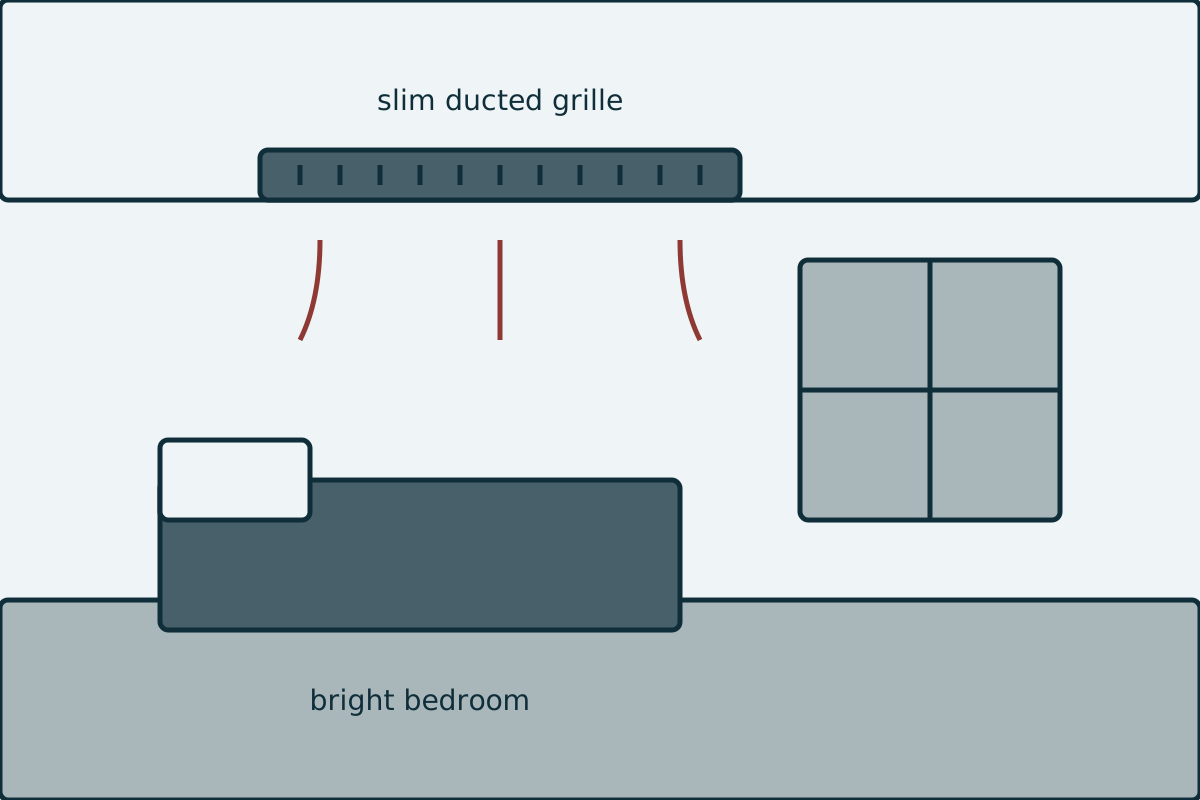
A ducted mini split is a mini split system whose indoor unit is a compact air handler, usually hidden in a ceiling, attic or closet, that pushes air through short ducts to several nearby rooms. The outdoor unit and refrigerant lines work the same way as on a wall-mounted ductless system. It is a middle option between a wall-mounted unit and full central air. This page is a spoke of our main guide to mini split AC in Sacramento. It explains how a ducted mini split works, where it fits, how it differs from wall-mounted heads and what to ask before you buy.
What is a ducted mini split?
A ducted mini split uses a horizontal air handler with short ducts to serve a few nearby rooms. The outdoor unit holds the compressor, fan and condenser coil. Refrigerant tubing and wiring run to a concealed indoor unit, which blows conditioned air through supply ducts and registers.
Compare the three common layouts:
| Layout | Indoor equipment | Ducts |
|---|---|---|
| Wall-mounted ductless | Small fan-and-coil unit on a wall, ceiling or floor | None |
| Ducted mini split | Concealed horizontal air handler | Short runs to a few rooms |
| Central ducted system | One central air handler | Full network with registers in each room |
ENERGY STAR notes that ductless systems do not need ductwork to be installed. A ducted mini split brings back a small air handler and a short duct run, while keeping the compact outdoor unit.
When does a ducted mini split make sense?
It makes sense when you want cooling and heating without visible wall units, but a full ducted system is too big or the ductwork is missing. Typical cases include a renovated attic or addition, a primary suite, a basement or a home where the owner dislikes indoor units on the wall.
Situations where it can fit:
- A hidden look. The only visible parts are the supply and return grilles.
- A small zone. One air handler covers a few rooms near each other, not an entire large house.
- A home with no ducts, or poor ones. ENERGY STAR notes that homes without ducts can use ductless mini-splits. A ducted mini split gives you a hidden option within that group.
- Rooms with tight spaces above the ceiling. The concealed unit needs room, so ask a specialist to check clearances.
If your home already has good ductwork, ENERGY STAR says a ducted air-source heat pump connected to the existing forced-air system may be a better fit. Compare the options in AC vs heat pump.
What are the advantages and disadvantages of a ducted mini split?
A ducted mini split keeps the efficiency and zoning of a mini split and hides the equipment, but brings back some duct issues. ENERGY STAR says leaky ducts can cut efficiency by as much as 20 percent. A ducted mini split keeps the runs short, which limits that problem, but does not remove it. Sealed ducts matter.
Advantages
- Hidden indoor equipment
- Even air distribution to several nearby rooms from one unit
- A compact outdoor unit and thin refrigerant tubing
- No full duct network to build through the house
Disadvantages
- Needs space for the air handler and ducts
- Some duct losses remain if ducts run through unconditioned space
- Fewer rooms per air handler than a central system
- Installation is more involved than hanging a wall unit, so ask a specialist what is needed in your home
How does a ducted mini split compare with a ductless air conditioner?
A ductless wall unit is easier to install and gives room-by-room control, while a ducted unit hides the equipment and covers several rooms from one point. Choose by layout, budget and what you can accept seeing on the wall. Our guide to a ductless air conditioner goes into the wall-mounted version and its upkeep.
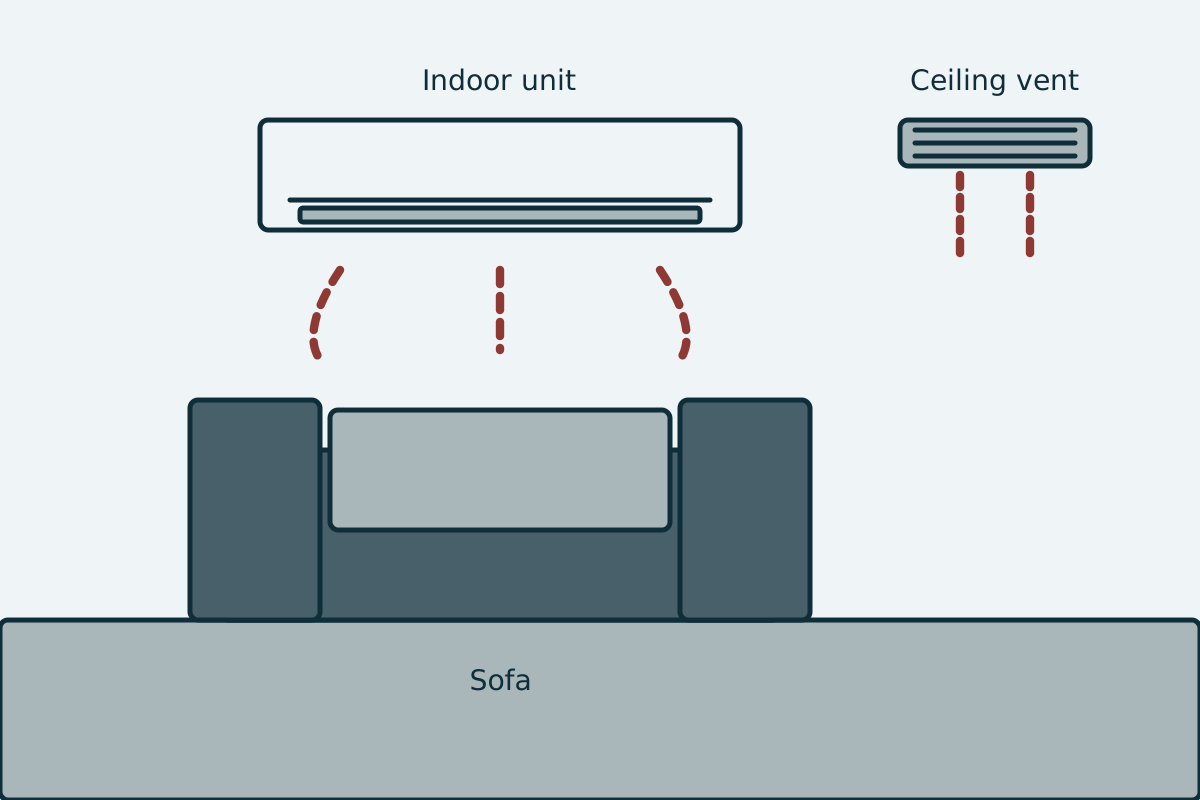
Rules of thumb:
- One room that needs cooling and heating: a wall-mounted unit is usually the simpler choice.
- Two or three rooms next to each other and you want no visible unit: ask about a ducted option.
- The whole house, with no ducts: ask about several indoor units, a ducted system or both, and get the zones sized.
- Whole house with good existing ducts: ask about a ducted heat pump on the existing system.
For the cost of a typical installation, use our ductless mini split installed cost page, and for the cost of ducts, see HVAC ductwork installation cost. Neither page gives a quote, and there is no sourced price for a ducted mini split, so ask for a written quote. A specialist quotes the real price after seeing the space.
What does installation involve?
Installation involves siting the outdoor unit, running refrigerant and wiring, fitting the concealed air handler and building the ducts. ENERGY STAR says the contractor should use an ACCA Manual J load calculation to verify the right system size. Oversized or undersized equipment performs poorly.
Things the specialist should cover:
- Where the outdoor unit goes: unobstructed airflow, away from doors and windows, with room to service it
- Where the air handler goes, and how the condensate drains
- Duct size, sealing and insulation
- Electrical supply, which may need an upgrade
- Pressure testing and a vacuum test of the refrigerant lines, and a charge set by the manufacturer's method
- Testing in every mode
Under EPA rules, only technicians who hold Section 608 certification, or employers of one, can buy refrigerant for home AC equipment. Do not attempt line set or charging work yourself.
What should you ask before you buy a ducted mini split?
Ask about sizing, ducts, the outdoor unit and the warranty terms in writing. A ducted system has more variables than a wall unit, so ask each specialist to explain their plan in plain words. Get the answers in writing so you can compare quotes on the same terms.
Good questions:
- What is your California contractor license number? C-20 is the CSLB classification for warm-air heating, ventilating and air-conditioning work, so check the number on the CSLB License Check page.
- Did you do a Manual J calculation, and what size is the system?
- How will the ducts be sealed and insulated?
- Where will the outdoor unit and air handler go, and is there access for service?
- If you are looking at a Mitsubishi mini split or another brand, does that exact model line include a ducted indoor unit? Ducted options differ by manufacturer. What brands do you install, and what does the manufacturer's written warranty cover? Read the terms rather than relying on a verbal promise.
- Can I get the quote itemized, with the outdoor unit, air handler, ducts and electrical work listed?
You can ask for several specialists at once through our quotes page. For an overview of how that works, see Sacramento Heating and AC.
Questions people ask
How long does ducted mini split installation take?
It depends on the layout. A ducted job takes longer than hanging a wall unit because the air handler, ducts and supply and return grilles must be installed too. Ask the specialist for a schedule and what access they need, and expect more time if the attic or ceiling needs prep.
What should I ask before I hire someone for a ducted mini split?
Ask for their California contractor license number and check it on the CSLB site. Ask about the load calculation, the duct design, the outdoor unit location, the written warranty terms, and whether the quote lists each component and the electrical work. Ask how they will test the system when finished.
Do I need to be home for ducted mini split work?
An adult should be home for the walk-through, so the specialist can see where the outdoor unit, air handler and ducts will go, and to approve the quote. Installation days typically need access to the attic or ceiling space and the outdoor area, so plan to clear those and secure pets.
Is a ducted mini split the same as central air?
No. Central air uses a large air handler and a duct network through the whole house. A ducted mini split uses a compact air handler and short ducts for a few nearby rooms, with a small inverter outdoor unit. Both can heat and cool if the system is a heat pump.
Does a ducted mini split also heat?
Many do, because mini splits are often heat pumps. ENERGY STAR describes the outdoor unit as pulling heat from outside air, with the system reversing in warm months to cool. Confirm the model supports heating, and see heat pump costs for more.
Where these facts come from
Page updated