Can air ducts be repaired?
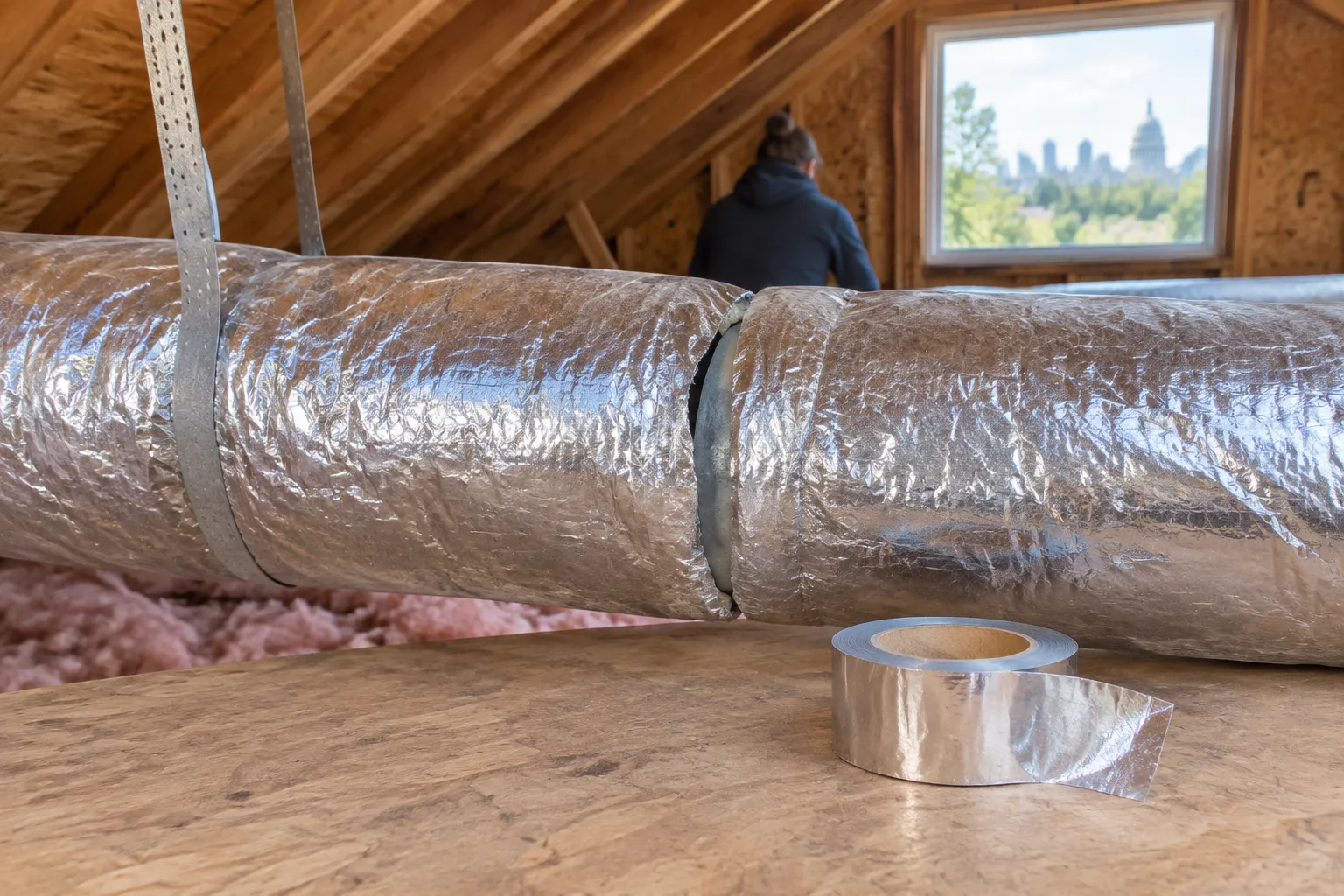
Most duct problems can be repaired without replacing the whole system. A specialist can seal leaking seams and joints, reattach ducts that have slipped off a connection, patch tears, replace a damaged section, and re-insulate runs that sit in an attic or crawl space. Full replacement makes sense only when ducts are collapsed, heavily damaged or undersized over most of the house.
The usual repair options:
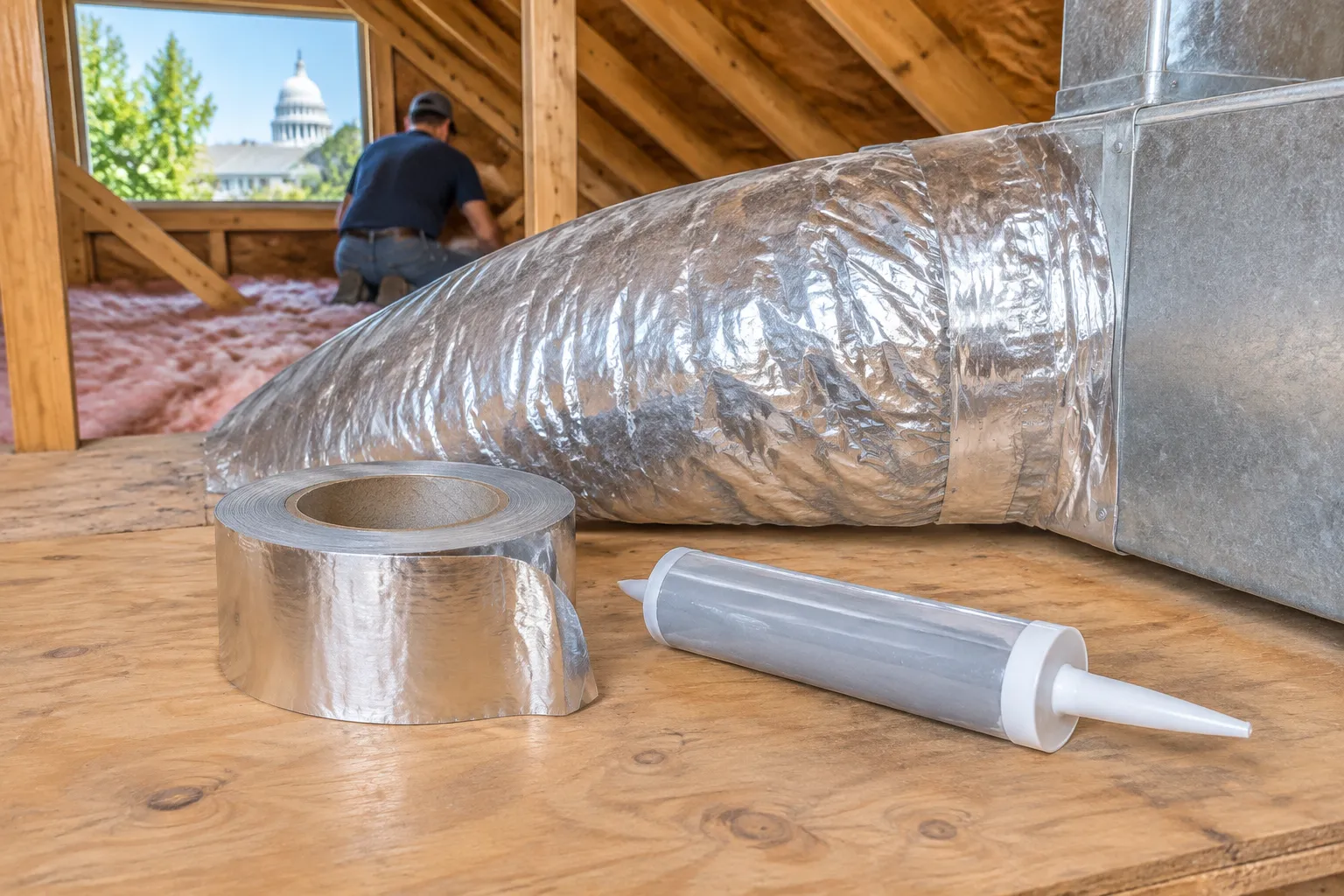
- Sealing seams and joints. Leaks at joints are common, and sealing is the lowest-cost fix.
- Reconnecting and supporting ducts. A flexible duct that has pulled loose or sagged into a kink restricts airflow until it is reattached and supported.
- Replacing a short section. A rodent-damaged or crushed section can be cut out and replaced.
- Fixing boots and registers. The box where a duct meets a vent can leak where it meets the ceiling or floor.
- Insulating. Ducts in unconditioned spaces lose heat or cooling before the air reaches the room.
A specialist will often test or inspect the whole system first, because one visible leak is rarely the only one.
What are the signs your ductwork needs repair?
The clearest sign is weak airflow from the vents in some rooms while others are fine. Other signs include rooms that never reach the thermostat setting, high energy bills with no change in use, dust around the vents, a system that runs longer than it used to, whistling or rattling in the walls, and visible gaps, tears or sagging ducts in the attic or crawl space.
What to look for yourself, without opening anything:
- Weak airflow. Hold your hand over each vent with the system running. A room with much weaker flow than the rest points to a leak, a kink or a closed damper on that run.
- Uneven rooms. One room hot while the next is cool can come from the ducts, not the equipment.
- Dust and odours from vents. Air pulled in through a leak on the return side can bring in attic or crawl space dust.
- Water at a vent. Condensation at a register is a different problem. See AC vent leaking water.
- Vents blocked by furniture. Keep supply vents and return grilles clear so air can move, and clear them first.
Check the filter too. A clogged filter also gives weak airflow from every vent, and ENERGY STAR advises checking it monthly. If every vent is weak, start with the filter. If only some are, the ducts are the more likely cause.
What does HVAC ductwork repair involve?
A repair visit usually starts with an inspection of the accessible ducts, boots and connections, often with a pressure or airflow test. The specialist then seals leaks, reconnects or replaces damaged sections, adds support or insulation, and rechecks airflow at the vents. Small jobs take a few hours. Whole-house work in a tight attic can take much longer.
What your quote should spell out:
- Which ducts and rooms are covered, and how many leaks or sections.
- What materials are used to seal and to replace sections.
- Whether insulation is included for ducts in unconditioned spaces.
- Whether airflow is rechecked after the work.
- Who is responsible for access, such as cutting an attic hatch or moving stored items.
A leaky duct system also hides in plain sight: the Department of Energy's installation guidance names leaky ducts, along with oversizing and improper charging, as common reasons an AC or heat pump falls short of its efficiency rating. If your equipment has been replaced with no change in comfort, the ducts are worth checking. See HVAC ductwork installation cost if sections need to be replaced or added.
How much does HVAC ductwork repair cost?
Fixr's ductwork repair cost guide puts duct repair at about $200-$1,000, with an average near $600. Replacing ductwork is a bigger job: Fixr's ductwork cost guide lists installation at $1,436-$17,149, with an average near $9,293. A local specialist quotes the real price after seeing your ducts.
| Job | Typical range |
|---|---|
| Ductwork repair | $200-$1,000 (average near $600) |
| Ductwork installation | $1,436-$17,149 (average near $9,293) |
Prices for individual items such as a boot, a register or airflow testing are not in those guides, so ask for each as a separate line on a written quote. What moves the price:
- How much duct is involved. A single leaking joint is a smaller job than a long run.
- Duct size. Small branch ducts are cheap to patch. Large trunk lines need more material and time.
- Access. A cramped attic or crawl space adds labor.
- Insulation. Re-insulating ducts adds cost per foot.
If a quote jumps straight to full replacement, ask what the testing showed and whether sealing would fix it.
Can I fix a duct leak myself?
Clearing vents, replacing the filter and moving furniture off registers are safe to do yourself. Entering a crawl space or attic to work on ducts is not a casual job: it is hot, cramped and often has electrical wiring and insulation. Leave sealing, reconnecting and replacement to a local specialist. If you ever smell gas or burning, do not investigate: leave the area and call 911 from outside.
Who does ductwork repair, and what should I ask?
C-20 is the CSLB classification for warm-air heating, ventilating and air-conditioning work. Ask any specialist for their license number and check it on the CSLB License Check page at cslb.ca.gov. Ask for a written quote, what sealing material they use, how they test airflow afterward, and who handles any permit. Ask whether a permit applies to your job.
If your duct problem is a symptom of something else, other pages may help. AC repair covers the equipment side, and our HVAC repair cost guide shows typical prices across jobs. You can also start at our home page to see everything we cover.
Questions people ask
How long does ductwork repair take?
A small repair, such as sealing a leaking joint or reconnecting a duct, often takes a few hours. Replacing a section takes longer, and whole-house sealing in a tight attic can take much longer. A local specialist gives a time estimate with the written quote, based on how much duct there is and how easy it is to reach.
What should I ask before I hire someone for ductwork repair?
Ask for their license number and check it on the CSLB License Check page. Ask what the quote covers, what materials they use for sealing and replacement, whether airflow is tested before and after, and what happens if more damage is found once the ducts are open. Get at least two written quotes so you can compare the scope, not just the price.
Do I need to be home for ductwork repair?
Usually an adult needs to be home to give access to the attic, crawl space, closets and rooms with vents. Ask when booking whether the specialist needs access to the equipment area and to every room. Move stored items away from attic hatches and crawl space doors before the visit to save time.
Will sealing my ducts lower my energy bill?
It can. ENERGY STAR says airflow problems can reduce a system's efficiency by up to 15 percent. Ducts that leak into an attic or crawl space waste air you have already heated or cooled. How much you save depends on how leaky the ducts are and how much your system runs. Ask for a test before and after if you want a figure.
Can I patch a duct leak with tape?
A quick patch may hide a leak for a while, but it is not a repair you can count on. The right sealing method depends on the duct type and where the leak is, and ducts in an attic or crawl space are hot and hard to reach. Ask a local specialist what material they use and how the repair will hold up over time.
Read on
- AC vent leaking water
Water dripping from a ceiling AC vent or duct?
- Ductwork installation cost
HVAC ductwork installation typically costs $1,436-17,149 in Fixr's guide, about $9,293 on average.
Where these facts come from
Page updated