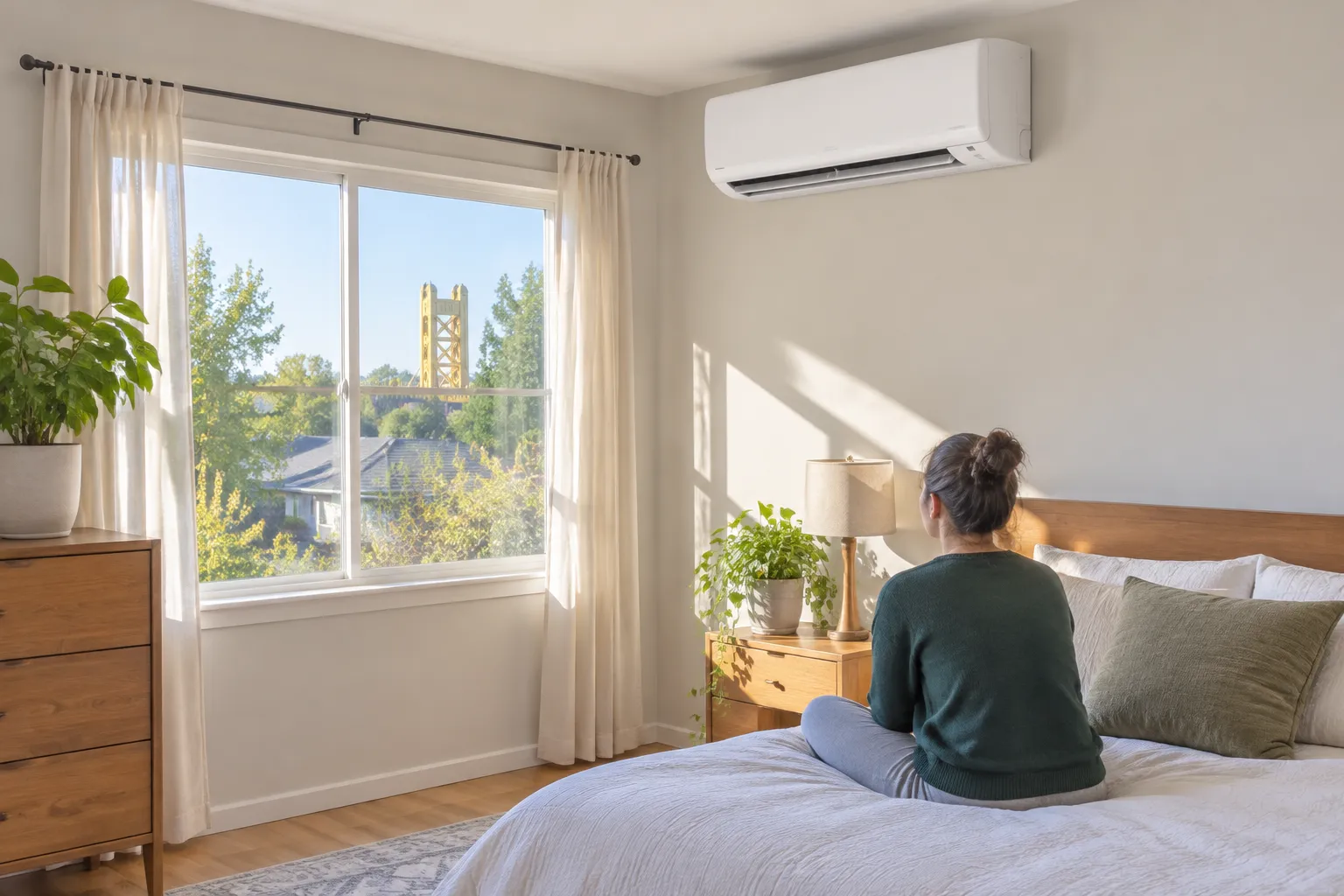
What is a mini split air conditioner and how does it work?
A mini split is a cooling and heating system with an outdoor unit and one or more indoor units joined by a refrigerant line, with no ductwork. The outdoor unit moves heat out of the home in summer. Most models can run in reverse and move heat in during winter. Each indoor unit conditions the room it sits in.
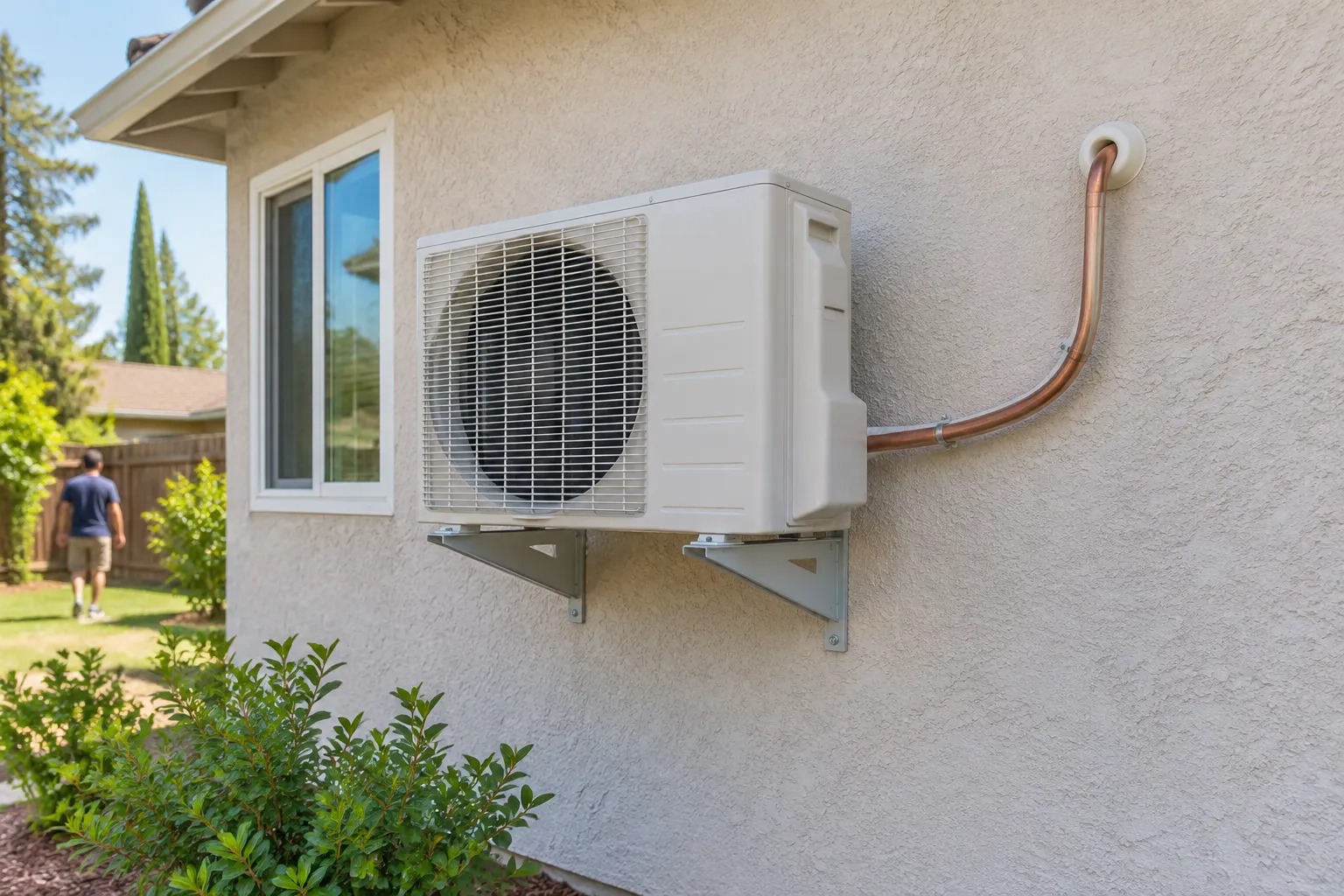
ENERGY STAR describes ductless heat pumps as having head units that mount on an interior wall or ceiling and connect to an outdoor unit. The US Department of Energy says heat pumps use electricity to move heat rather than create it, and that they can reduce electricity use for heating by 50 percent compared with electric furnaces and electric baseboard heaters. Because there are no ducts, you avoid heat lost through leaky ductwork. You also get room-by-room control, since each head has its own thermostat or remote.
Two kinds of indoor unit exist. Most are wall-mounted heads. A ducted mini split hides a small air handler in a ceiling or closet and uses short ducts. Our guide to the ductless air conditioner covers it further.
What is the disadvantage of mini split?
The main disadvantages are upfront cost, visible indoor units, and needing several units for a home with many closed rooms. Some people also dislike the look of a wall head. Installation takes careful work on the outdoor pad, the refrigerant line set and the electrical supply, so a poor install shows up as noise, leaks or weak performance.
The fair list:
- Higher upfront price than a window unit. If the home already has a good duct system, ask for a quote on both options.
- Several heads for several rooms. One outdoor unit can feed multiple indoor units, but each head adds cost.
- Appearance. Wall heads are visible. Ceiling cassettes and ducted models hide more but cost more.
- Condensate water. Ask the specialist where the water from the indoor and outdoor units will drain, and keep that spot away from doors and walkways.
- Upkeep. Filters need cleaning, and a specialist should handle anything involving refrigerant.
How many mini splits do I need for a 1000 sq ft house?
Layout matters more than square footage. ENERGY STAR says a contractor should size the system with a load calculation called Manual J, and notes that open spaces are generally easier to cool. A 1,000 sq ft open plan may need one indoor unit. A home with closed bedrooms often needs one per zone, or a ducted model.
Ask the specialist to explain how many BTU each indoor unit should be and why. BTU is the unit that rates heating and cooling capacity, and the right number depends on insulation, windows, sun exposure and the layout, not just floor area. Oversizing is a common mistake: the system cycles on and off and the home feels less comfortable. Ask for the Manual J figures per room or zone and compare them to what is quoted.
How much does a mini split installation cost?
Fixr's ductless air conditioner installation cost guide puts a typical installed mini split at about $4,577 to $8,328, with an average near $6,357. No sourced price exists for multi-zone systems, so ask for a written quote that lists each indoor unit. A local specialist quotes the real price after sizing the home and seeing where the outdoor unit goes.
| Item | Typical range |
|---|---|
| Typical mini split installed | $4,577 to $8,328 |
| Average | near $6,357 |
What moves the price:
- Number of zones and the capacity of each unit in BTU.
- Line set length between the outdoor and indoor units, and how hard it is to run.
- Electrical work. A new circuit or panel upgrade adds cost.
- Model. A Mitsubishi mini split or a Daikin mini split are two brand names people search for; we do not rank brands. Price tracks capacity, efficiency rating and features more than the badge.
- Wall type and mounting. Masonry, a tall wall or a roof or pad install add labor.
Mini splits cost more up front than a plain AC but may save on the electric bill when they replace electric resistance heat. See heat pump cost and AC vs heat pump if you are weighing the options.
Is Mitsubishi cheaper than Daikin?
We found no reliable published price comparison between the two brands, so we do not claim one is cheaper. A Mitsubishi mini split and a Daikin mini split at the same capacity and efficiency usually land in the same general price band. The difference comes from the model, the number of heads and who installs it.
The practical way to compare is to ask for quotes for the same capacity and zone layout, and to ask each specialist what they install and service. Ask whether they can service the model locally, which parts they can get, and what the manufacturer's warranty covers and for how long. Check that any warranty needs registration, and whether the installer's own work is covered separately. Do not assume that a brand with a famous name is priced the same everywhere.
What mini split brands should I stay away from?
We do not rank or name brands to avoid. What you can check instead: whether the model is current and available, whether a local specialist services it, and whether parts are easy to get. ENERGY STAR also says that if winter temperatures regularly dip below freezing where you live, you should talk to your contractor about choosing an ENERGY STAR unit.
Units bought online with no installer support carry a risk. Without a local specialist who can service the model, a small fault can mean waiting for parts. Ask each specialist about the model they propose, how long they have installed it (their own answer, which you can ask them to put in writing), and what happens if the unit fails in its first years.
Questions people ask
Is a mini split AC worth it?
It can be, if you have no ducts, an addition, a garage, or rooms that the main system serves poorly, or if you want efficient heat as well as cooling. It is harder to justify if you already have good ducts and a working central system. Compare quotes for a mini split and a central replacement before you decide.
Is it cheaper to run a 110 or 220 mini split?
Voltage alone does not decide running cost. Efficiency rating, capacity and how you use the unit matter more. Smaller units often run on a standard household circuit and larger ones usually need a dedicated higher-voltage circuit, so the choice is mostly set by capacity. Check the model label and ask an electrician or the specialist what circuit it needs.
Why is my electric bill so high with a mini split?
Common causes are an oversized or undersized unit, a dirty filter or coil, a blocked outdoor unit, a thermostat set very high or low, or the mini split being your only source of heat in cold weather. If the bill jumped, ask a specialist to check the filter, coil and refrigerant. Do not clean past the filter yourself.
How long does a mini split installation take?
A single-zone install is usually quicker than a multi-zone one, and hard-access jobs take longer. The specialist tells you the timing after seeing the home. Permits, electrical work and special mounting can add days. Ask whether a permit applies to your job and who handles it.
What should I ask before I hire someone to install a mini split?
Ask for their California license number and check it on the CSLB License Check page at cslb.ca.gov; C-20 is the CSLB classification for warm-air heating, ventilating and air-conditioning work. Ask for a written Manual J load calculation, the model and BTU of every unit, the full installed price, who handles permits, and what the manufacturer warranty covers. You can also go back to the home page for other services.
Read on
- Mini split installed cost
A typical ductless mini split costs $4,577-8,328 installed.
- Ducted mini split systems
What a ducted mini split is, how it differs from wall-mounted ductless units, when it fits your home, and what to ask a local specialist…
- Ductless air conditioners
How a ductless air conditioner works, its advantages and disadvantages, 2-zone heat and cool setups, repair basics and what to ask a local…
Where these facts come from
Page updated