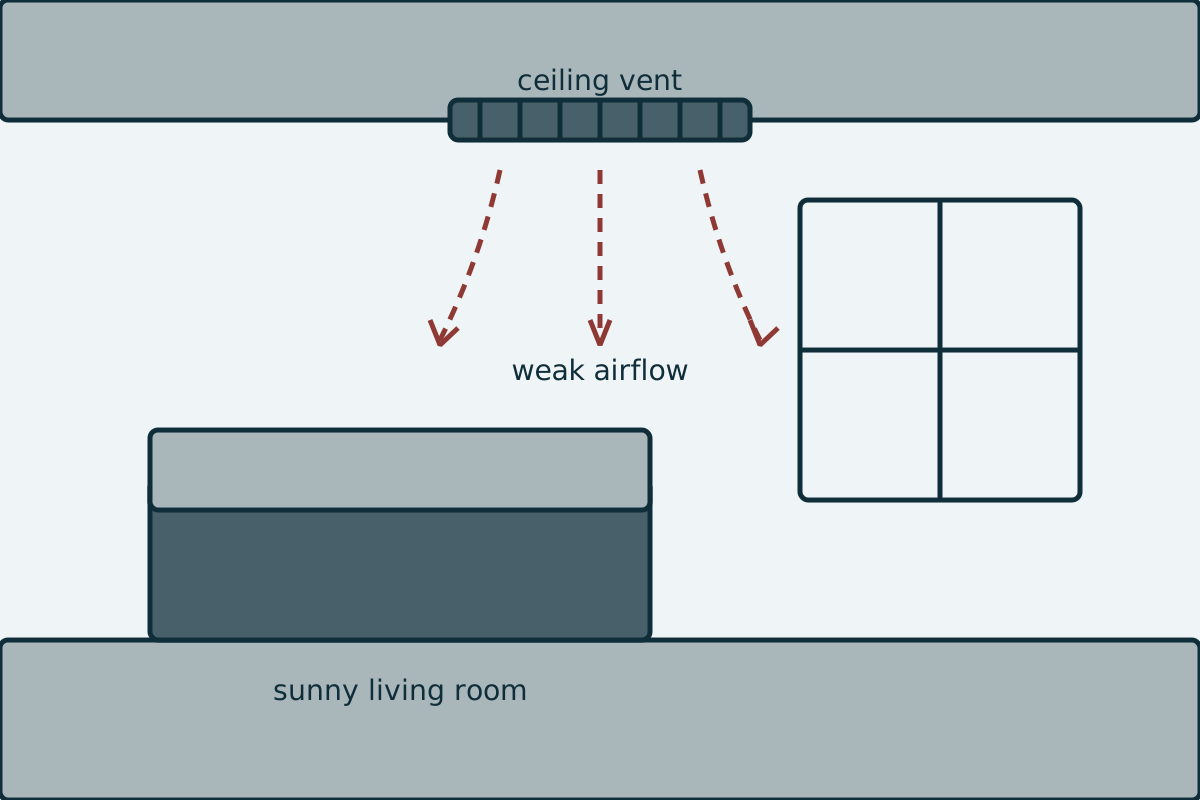
If your air conditioner runs but the air is not cool, start with the three things you can check safely: the thermostat setting, the air filter and the breaker. If those are fine, the cause is most often a dirty or frozen coil, a failed part in the outdoor unit such as a capacitor or fan, or low refrigerant from a leak. These last three need a specialist. This page backs up our main guide to AC repair. It explains how to tell the causes apart and what each repair costs.
Why is my AC running but not cooling?
The air conditioner has to do three things at once: move air across a cold indoor coil, move heat outside through the outdoor unit and keep enough refrigerant in the loop. If any one fails, the fan can run while the air stays warm. The common causes are a clogged filter, a thermostat set wrong, no power to the outdoor unit, a dirty or iced coil, a failed capacitor or fan motor, a refrigerant leak and a failing compressor.
Sacramento summers make the load heavy. NOAA 1991-2020 normals put the average July high at about 92.6 F, so an ac unit that is struggling shows it quickly. If the house has stopped cooling in a heat wave, treat it as urgent but do not skip the safe checks.
What should you check first?
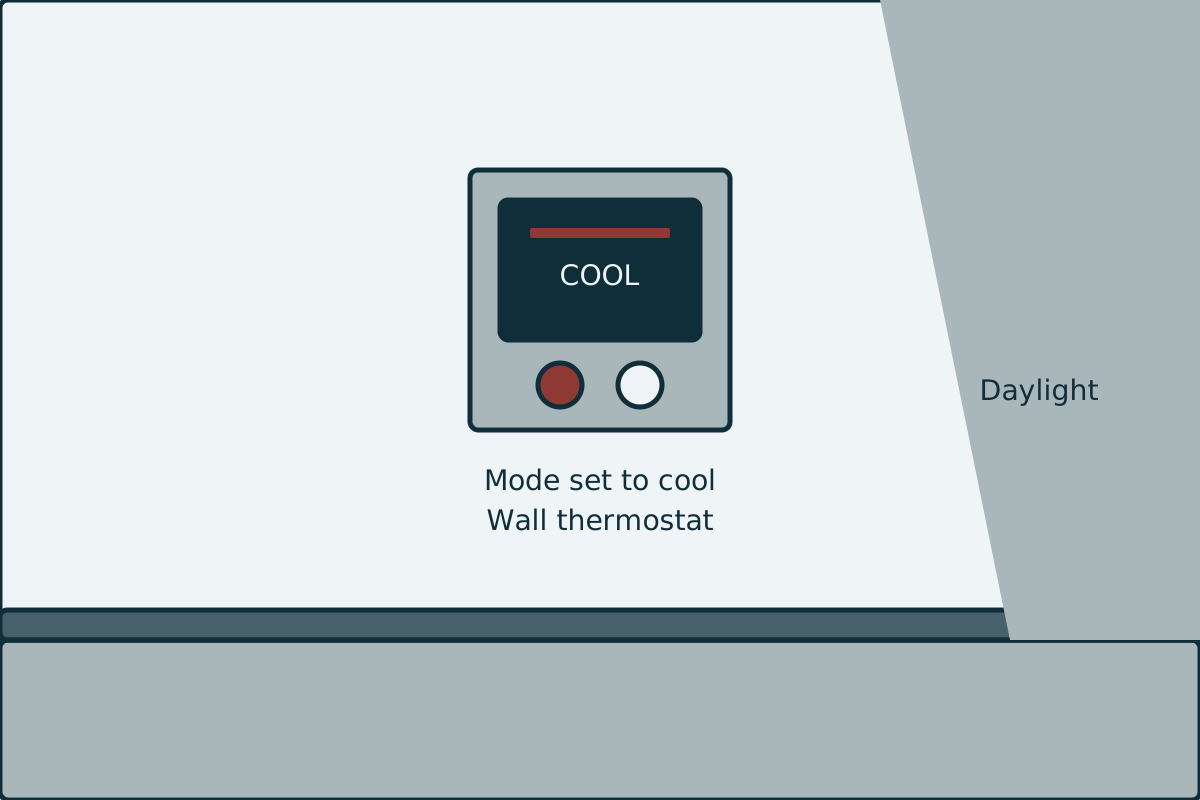
Check the thermostat is set to Cool, set below the room temperature, with fresh batteries if it takes them. Check the filter; a clogged filter blocks airflow. Check the indoor breaker for both the air handler and the outdoor unit, and the outdoor disconnect box only by looking, not opening. Make sure vents are open and not blocked by furniture, and that nothing is piled against the outdoor unit.
If you reset a tripped breaker once and it trips again, stop. A breaker that trips repeatedly points to a failing part, and resetting it again risks damage. Do not open panels, touch capacitors or handle refrigerant lines. Leave those to a specialist.
How to read what you feel
- Air blows but is warm from every vent. Often the outdoor unit is not running, or the refrigerant is low. See AC blowing warm air.
- Airflow is weak and the lines or coil are icy. Probably frozen; read AC system freezing up before you run it again.
- The outdoor fan is still and the indoor fan runs. Possibly a failed capacitor, a tripped breaker or a bad contactor.
- Cool air in some rooms and not others. A duct, damper or balance issue, not the cooling system itself.
What are the common causes and fixes?
Most cases come down to airflow, power or refrigerant. A dirty filter and thermostat settings are the checks you can do yourself, while a failed capacitor, a fan motor or a refrigerant leak needs a specialist. Fixr's air conditioner repair guide puts a typical central AC repair at $250-700, with an average near $375. The table below shows the ranges that guide gives for the repairs behind this symptom, and a local specialist quotes the real price after a diagnosis.
| Cause | Who fixes it | Typical published repair cost |
|---|---|---|
| Dirty filter | You | Cost of a new filter |
| Thermostat settings or fault | You, then a specialist | Ask for a written quote |
| Failed capacitor | Specialist | $100-400 |
| Failed fan motor | Specialist | Ask for a written quote |
| Refrigerant leak | Specialist | $200-1,500 |
| Failed compressor | Specialist | $600-3,000 |
| Diagnostic visit | Specialist | Ask for a written quote |
A specialist quotes the real price after testing. See AC repair cost for how the ranges are built.
Is the refrigerant low?
Low refrigerant means there is a leak, because an air conditioner does not use up refrigerant. Topping it up without finding the leak only delays the next failure. The U.S. EPA says anyone who buys refrigerant for a stationary appliance or handles it must hold Section 608 certification, and that intentionally venting refrigerant is prohibited. Ask the specialist to find and fix the leak, and read our page on AC recharge cost before agreeing to a recharge.
What if it is a window or portable AC, a new unit or an apartment?
The same logic applies with some twists. A portable unit such as a Black and Decker model may be cooling in a room that is too large, with the exhaust hose kinked or the filter clogged, and some models have a water tank that fills and stops the unit.
A brand new air conditioner that does not cool is a sizing, installation or charge problem, and it should go back to whoever installed it, since new equipment usually carries a manufacturer warranty.
In an apartment you may not control the outdoor unit. Report the problem to the landlord or building manager in writing and keep a record of the date. Do not attempt repairs on a rental system yourself.
Does the brand matter, such as Goodman, Lennox or Frigidaire?
For this symptom, the brand rarely changes the likely causes. Goodman, Lennox, Frigidaire and others all depend on airflow, power and refrigerant. Where they differ is in details such as reset buttons, error codes shown on the thermostat or board, and the parts a specialist needs. Give the specialist the brand, the model number from the outdoor unit's label and any codes, and they can plan the visit.
How is a fan blowing but not cooling different?
If the fan blows but the air is not cold, the blower is working and the cooling part is not. That points to the outdoor unit, the refrigerant or an iced coil, not to the indoor blower. If air blows weakly and the room warms, the filter or a duct may be at fault. Describe exactly which fan runs, because the specialist will start in a different place for each.
When should you call a local HVAC specialist?
Call when the checks do not help, the breaker trips, the outdoor unit hums but does not spin, you hear grinding or hissing, or ice shows up. Switch the system off at the breaker if it gives off a burning smell or sparks, and call 911 if you see smoke or flames. Booking air conditioning service before summer can help you save on bigger repairs by catching small faults early.
C-20 is the CSLB classification for warm-air heating, ventilating and air-conditioning work. Ask any specialist for their license number and check it on the CSLB License Check page of the California Contractors State License Board before anyone opens the unit. Get the price in writing, and if you want options, request quotes from local specialists or begin at Sacramento Heating and AC. If you suspect a bad capacitor, HVAC capacitor replacement cost explains the usual price.
Questions people ask
How long does it take to fix an AC that runs but does not cool?
Simple fixes such as a filter or thermostat take minutes. A capacitor or fan motor swap usually takes about an hour or two when the part is on the truck. A refrigerant leak search and repair takes longer, and a compressor or coil replacement can be a half day or more. The specialist will tell you after diagnosis.
What should I ask before I hire someone to look at my AC?
Ask for their California contractor license number, the diagnostic fee and whether it comes off the repair, what the quote covers, the warranty on parts and labor in writing, and how they will find a refrigerant leak if there is one. Get the total price before work begins.
Do I need to be home for the repair?
Yes, an adult should be home to let the specialist in, show them the thermostat and indoor unit, and approve the price. The outdoor unit is usually outside, but they will need to check inside too. Have the model number and a short note of when the problem started ready for the visit.
Can a dirty filter stop my AC from cooling?
Yes. A clogged filter restricts airflow across the coil, which can make the air weak and, in time, cause the coil to freeze. Check it first and replace it if it is dirty. Checking it can save a service call, and a regular replacement schedule keeps the problem from returning.
Is it safe to keep running an AC that is not cooling?
Not for long. Running a system with low refrigerant, a frozen coil or a failing part can turn a small repair into a bigger one. Turn it off at the thermostat and call a specialist, and tell them if you saw ice or heard unusual noises.
Where these facts come from
Page updated