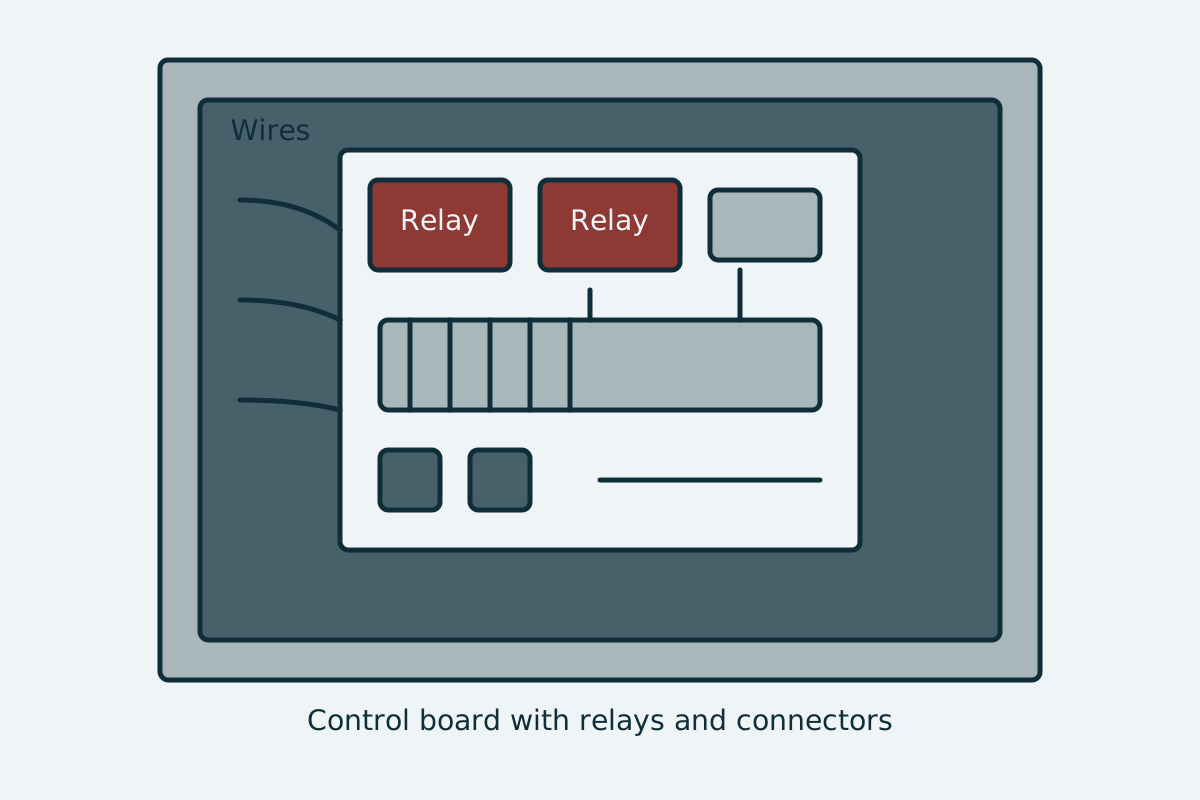
Furnace control board repair usually means replacing the board. The control board is a circuit board that tells the furnace what to do and in what order, so a failed one can leave you without heat even when every other part is fine. American Standard Air's HVAC repair cost guide puts a furnace control board replacement at $300 to $650. This page sits alongside our overview of furnace parts and ignition. It covers how to tell a board problem from a simpler one, what you can check safely, and what a local specialist will do.
What does a furnace control board do?
The control board runs the furnace through its startup sequence: it reads the thermostat, starts the draft fan, checks that safety switches are happy, opens the gas valve, lights the burners, confirms flame and then starts the blower motor. If any step fails, it shuts the furnace down. Because it sits in the middle of all those parts, it is one of the more expensive electronic components in the cabinet.
Older furnaces may use a standing pilot light, and many newer ones use an electronic ignitor, but both depend on the board's timing. A board does not wear out like a belt. It fails when heat, moisture, a power surge or a failing part nearby damages the circuits. That is why a specialist often checks the parts connected to the board before blaming the board itself.
What are the signs of a bad furnace control board?
The main signs are blinking error lights on the board, a furnace that will not start or keeps stopping mid-cycle, and a burned smell near the board. One national guide lists flashing or blinking red warning lights, temperature swings that continue after other causes are ruled out, interrupted cycles and burn marks on or near the board.
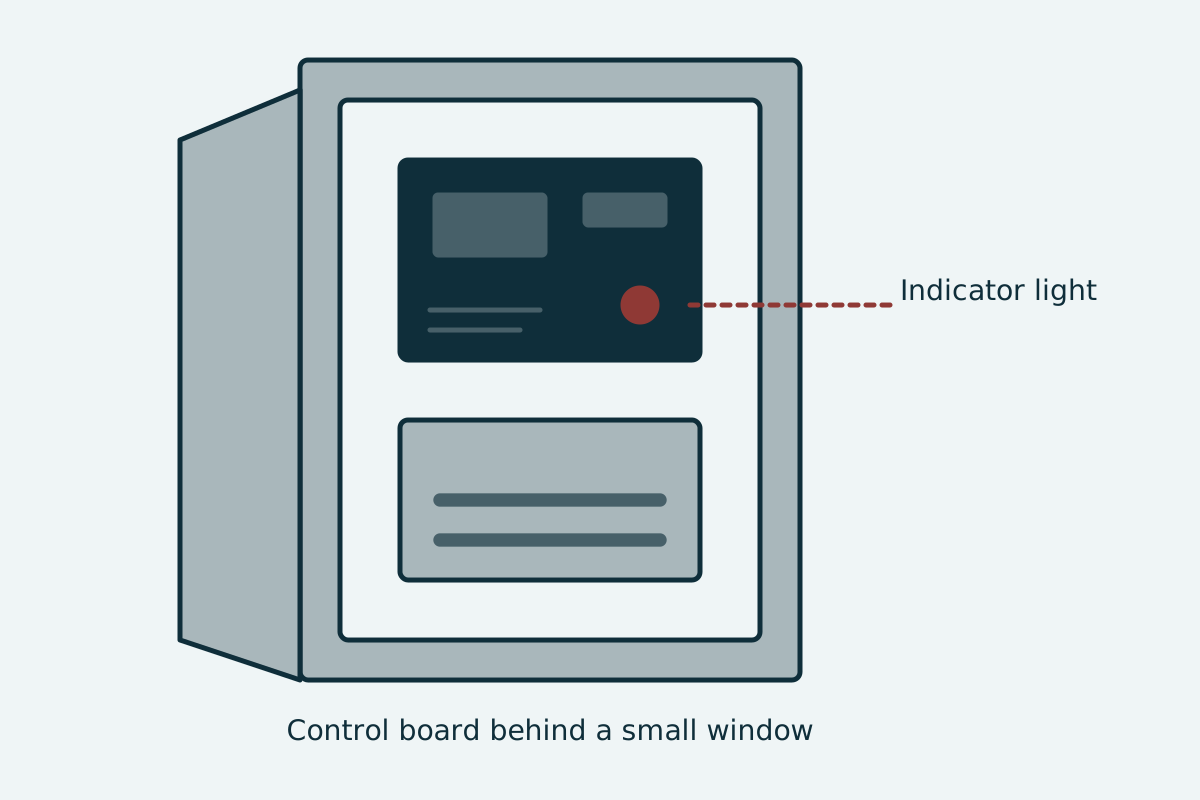
Other clues include a blower that runs constantly or never starts, and a furnace that works for a day and then goes dead. Most furnaces have a small window in the cabinet where a status light flashes a code. The code and the furnace's model number help a specialist narrow the problem before they arrive. You can read the light through the window; you should not remove the panel to look at the board.
Is it the board or something simpler?
Many "bad board" calls turn out to be something else. A dirty flame sensor, a failing pressure switch, a weak ignitor or a clogged filter can each look like a board fault. The furnace flame sensor is a common example, because a sensor that cannot confirm flame makes the board shut the burners off after a few seconds. A good diagnosis tests those parts first, which is part of why a diagnostic visit is billed on its own.
What can you check yourself first?
You can check four things without opening the furnace: the thermostat settings and batteries, the furnace's own power switch and the breaker, the air filter, and the blinking status code through the viewing window. If the furnace has been off for a while, switching it off at the wall and back on after a minute can clear a lockout on some models.
Stop there. Do not open the control compartment, jumper wires, or reset the furnace repeatedly. Repeated resets can hide a safety problem. If you smell gas, leave the home and call 911 from outside. If a carbon monoxide alarm sounds, get outside to fresh air and call 911, as the Consumer Product Safety Commission advises. If the board smells burned or you see sparks, shut the furnace off at the breaker and call a specialist.
How much does furnace control board repair cost?
American Standard Air's HVAC repair cost guide puts a furnace control board replacement at $300 to $650. There is no sourced range for the diagnostic visit or for labor alone, so ask each specialist for those as written figures. Treat the range as a guide, because a local specialist quotes the real price after seeing the furnace.
| What you are paying for | Typical published range |
|---|---|
| Diagnostic visit | Ask for a written quote |
| Board replacement, parts and labor | $300-650 |
These are a guide only. A local specialist quotes the real price after seeing the furnace.
What pushes the price up or down?
- Furnace type. Variable-speed furnaces use more advanced, more expensive boards than single-stage models.
- Labor. Rates differ by experience, demand and where the specialist is based. Emergency and after-hours calls cost more.
- Other repairs. A blower motor, ductwork or coil problem found during the visit adds to the total.
- Part availability. Some boards are made for one model only, which can mean ordering the part and a second visit.
Ask whether the quote includes the diagnostic fee and whether that fee comes off the repair price.
When should you replace the furnace instead of the board?
Repair is usually sensible when the furnace is otherwise sound. The U.S. Department of Energy's furnace analysis assumes an average residential furnace lifetime of 21 years, an assumption for cost analysis and not a promise for your equipment. If the quote for a board is a large share of a new furnace's price, or the same furnace has had several repairs, ask for a replacement quote too.
Our furnace replacement cost for gas systems guide gives ranges for that comparison. A cracked heat exchanger found during the same visit would change the answer on its own, because that is a safety problem as well as an expensive one.
When should you call a local HVAC specialist?
Call a specialist whenever the furnace will not start after the basic checks, keeps shutting down, shows a code you cannot clear, or the board smells burned. You do not need to watch the work, but someone should be home to let them in and sign off on the quote.
C-20 is the CSLB classification for warm-air heating, ventilating and air-conditioning work. Ask any specialist for a license number and check it on the CSLB License Check page of the California Contractors State License Board before you agree to anything. Get the price in writing before work starts. For a wider look at cost, see furnace repair cost, and to compare options start at Sacramento Heating and AC or request quotes.
Questions people ask
How long does furnace control board repair take?
Most board replacements take one to two hours once the part is on the truck. If the specialist has to order a board for your model, the work may be split across two visits. Diagnosing the problem first adds time, since they will usually test the ignitor, sensor and switches before swapping the board.
What should I ask before I hire someone for furnace control board repair?
Ask for their California contractor license number, whether the quote covers the diagnostic fee, whether the board is a new or refurbished part, what the warranty on the part and labor is in writing, and how they confirmed the board was the cause. Get the total price before work starts.
Do I need to be home for furnace control board repair?
An adult should be home to give access to the furnace, answer questions about its behavior and approve the quote. You do not need to stay beside the furnace. Most people stay nearby in case the specialist finds another problem that needs a decision.
Can a furnace control board be repaired instead of replaced?
Sometimes. A technician may find a loose connection, a blown fuse on the board or a damaged wire and fix that instead. When circuits are burned, replacement is the normal answer. Your specialist can tell you which applies for your model and whether a repair is worth the cost.
Can a bad control board be dangerous?
A failed board that shuts the furnace down is doing its job. The risk is from wrongly bypassing safety features, such as a jumpered switch, which should never be done outside a trained specialist's work. If you smell gas or a carbon monoxide alarm sounds, leave the home and call 911.
Where these facts come from
Page updated