There is no sourced price range for replacing a gas furnace alone, so this page does not give one. The nearest sourced figures are for the whole system, furnace and air conditioner together, which Fixr puts at $8,000 to $20,000, and for individual furnace repairs. Your real estimate depends on size, efficiency, ducts and venting, so ask for a written quote. This page sits under the HVAC system installation cost guide and breaks the estimate into parts.
How much does it cost to replace a gas furnace?
Ask for a written quote, because no fetched guide gives a furnace-only replacement range that this site can stand behind. What is sourced is the cost of replacing the whole system, at $8,000 to $20,000 from Fixr. High-efficiency models, tricky venting or new ductwork all change what a specialist will quote for the furnace alone.
Here is how the sourced figures line up with the parts of an estimate:
| Part of the estimate | Sourced range | What moves it |
|---|---|---|
| Whole HVAC system replacement (furnace and AC) | $8,000-20,000 | Equipment, ducts, labor |
| Furnace unit | Ask for a written quote | Size, efficiency, features |
| Labor to install | Ask for a written quote | Access, venting, local rates |
| Old furnace removal and disposal | Ask for a written quote | Access, local disposal rules |
| Permit, where one applies | Ask for the permit fee as a line on the quote | Permit fees vary by city and county |
Treat these as a guide, not a quote. A local specialist gives the real price after looking at your home. Get more than one estimate and make sure each one lists the same equipment and the same work, so you can compare like with like.
What affects a gas furnace estimate?
Five things move the price most: the size of the furnace, its efficiency rating, the condition of the ducts and venting, how hard the install is, and local labor rates. Efficiency and size drive the unit price. Ducts and venting drive the labor.
- Size. A larger home or a colder area needs more heating output, which costs more. A furnace that is too big wastes money and can short cycle, as covered in furnace short cycling. A specialist can run a load calculation to size it. Floor area alone is not a reliable guide.
- Efficiency (AFUE). AFUE shows how much of the fuel becomes heat, and a higher number is more efficient. Ask for the AFUE of each quoted model. Higher efficiency can cost more up front, and the Department of Energy says condensing models are usually cost-effective over their life.
- Ductwork. Reusing sound ducts keeps the cost down. Repairing, replacing or adding ducts can raise it a lot. See HVAC ductwork installation cost.
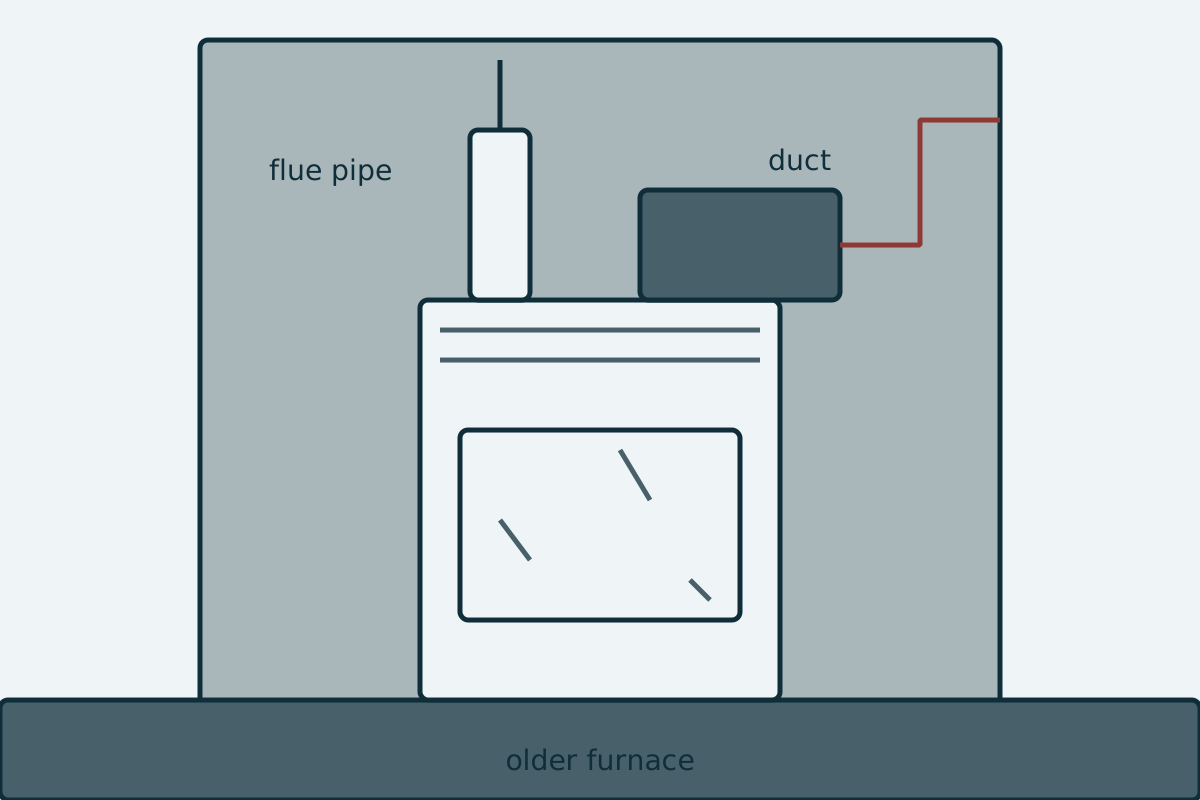
- Venting and gas piping. A high-efficiency furnace uses different venting from an older unit, which can add labor.
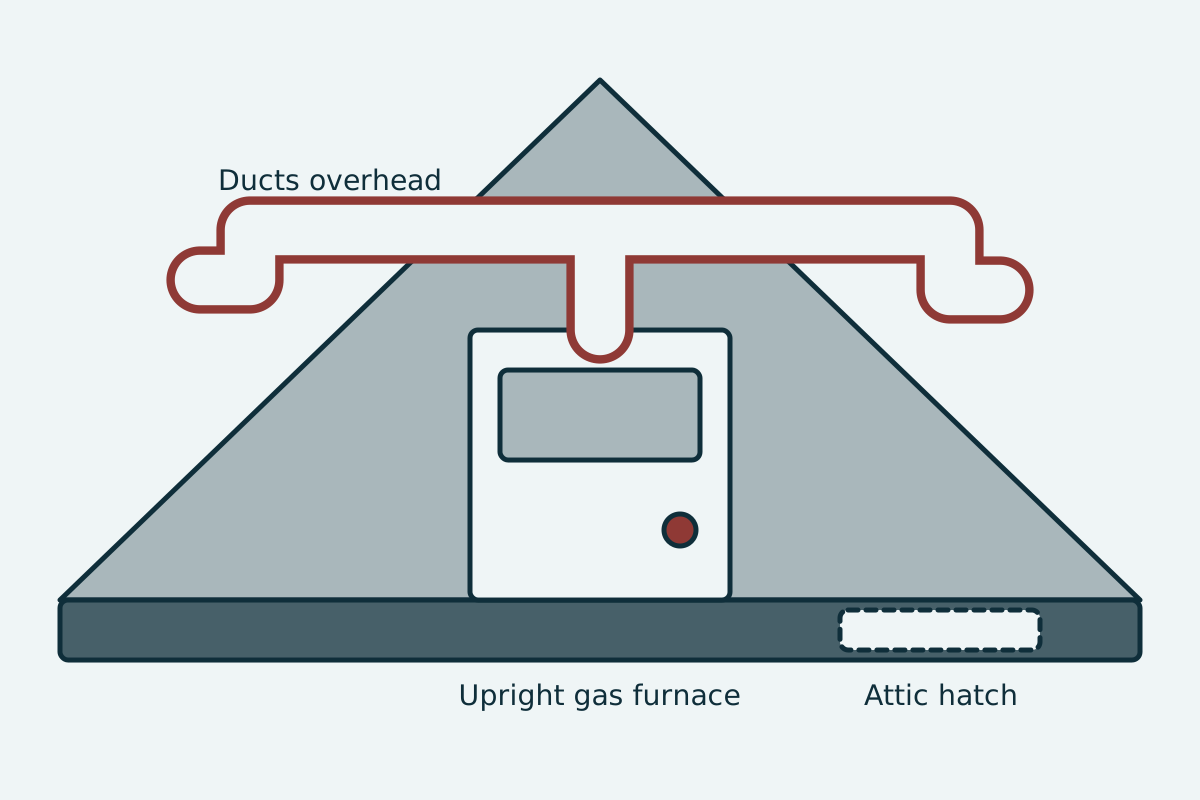
- Access and removal. Tight attics or closets and old equipment that needs removing both add time.
Home size, local labor rates, AFUE rating, venting upgrades, ductwork changes and thermostat installation can all change the total, so ask which are in the quote.
When should I replace my furnace instead of repairing it?
Replace when the furnace is old, needs repeated repairs or no longer keeps the home comfortable. The Department of Energy's furnace analysis assumes an average residential furnace lifetime of 21 years, an assumption for cost analysis and not a promise for your furnace. A single repair on a younger furnace is usually the better choice.
Signs that point toward replacement:
- The furnace is old.
- Repairs keep coming back.
- Heating bills rise.
- Strange noises, rust or cracks, soot or odd smells.
- Rapid on-off cycling and cold rooms.
A cracked heat exchanger is a safety concern and often tips the decision. If a specialist finds one, ask them to show you the evidence, and get a second opinion if you are unsure. For common repair prices to compare, see furnace repair cost. The quote should show repair and replacement side by side so you can see what each choice costs.
What does a furnace replacement estimate include?
A good estimate lists the furnace model and efficiency, the installation labor, removal of the old unit, any permit the specialist says applies, venting and gas connections, thermostat, and what the manufacturer's paperwork says. Ask for it in writing, with a line for each, before any work starts.
Installation labor usually covers steps like these:
- Assess the ductwork, venting, heating needs and permits.
- Disconnect and remove the old furnace.
- Check duct compatibility and adjust gas, electrical or duct connections.
- Position and connect the new furnace.
- Test airflow, temperature output, burner operation and safety controls.
- Verify gas connections and venting.
- Walk you through the thermostat and maintenance, such as filter changes.
Ask the specialist how long the install will take and whether a permit applies to your job. Replacing a furnace, AC or heat pump normally needs a permit, so ask who pulls it.
What do related HVAC parts cost?
Several related parts are priced separately from a furnace replacement. American Standard Air puts a furnace control board replacement at $300 to $650, and Fixr puts a programmable thermostat replacement at $85 to $300 and a smart thermostat at $185 to $600. For parts such as surge protectors, expansion valves, condensate pumps and zone boards, there is no sourced range, so this page does not give one.
Common questions in this area:
- Circuit board (control board). $300 to $650. It is a specialist job, and a board on an old furnace is a good time to ask about replacement.
- Thermostat. $85 to $300 for a programmable model and $185 to $600 for a smart one. See HVAC thermostat replacement cost.
- Surge protector, expansion valve, condensate pump, zone board. These are priced by the specialist for your system. The expansion valve belongs to the cooling side. Ask for each as its own line on an estimate.
- Cost calculators. Online calculators give a rough idea only. Because size comes from a load calculation, not square feet alone, and ducts differ in every home, an in-person estimate is the reliable number.
- Installing a new AC with the furnace. Many people replace both at once. The HVAC system installation cost page covers combined jobs.
How do I get a fair estimate in Sacramento?
Get at least two written estimates that list the same equipment and work. C-20 is the CSLB classification for warm-air heating, ventilating and air-conditioning work. Ask each specialist for their license number and check it on the CSLB License Check page of the CSLB website. Ask what is included and what is extra.
Things to ask each specialist:
- What size furnace do you recommend, and how did you calculate it?
- What AFUE rating, and what is the price difference between your options?
- Does the estimate include the old furnace removal and any permit that applies?
- Will the ducts and venting be reused or changed?
- What is the labor charge, and what is the timeline?
- What does the manufacturer's paperwork cover, in writing?
If you want estimates from local specialists, the quote page on the Sacramento Heating and AC site is the place to start, and a local specialist will get back to you with their own pricing.
Questions people ask
How long does furnace replacement take?
The time depends on the furnace and your home. A simple swap of a similar furnace can be shorter, and a job that changes venting or ducts can run longer. Ask the specialist for the expected time and what you need to clear.
What should I ask before I hire someone for furnace replacement?
Ask for their California contractor license number and check it on the CSLB site. Ask for a written estimate that lists the model, efficiency, labor, removal and any permit. Ask how they sized the furnace, and get the answers in writing.
Do I need to be home for furnace replacement?
Yes, plan to be home or have an adult there on install day. The specialist needs access to the furnace, the thermostat and the gas and electrical connections. They will also walk you through the thermostat and filter changes at the end.
Is a higher efficiency furnace worth the extra cost?
It can be. A higher AFUE rating means more of the fuel becomes heat, and the Department of Energy says condensing models are usually cost-effective over their life. Ask the specialist to show the price difference between options in writing, then compare it with the extra cost.
Does the price include removing my old furnace?
Not always. Removal and disposal are sometimes listed as a separate item, and there is no sourced figure for it here. Ask whether it is in the estimate. If it is not, ask what it adds. Ask the same question of every specialist so the quotes cover the same scope.
Where these facts come from
Page updated