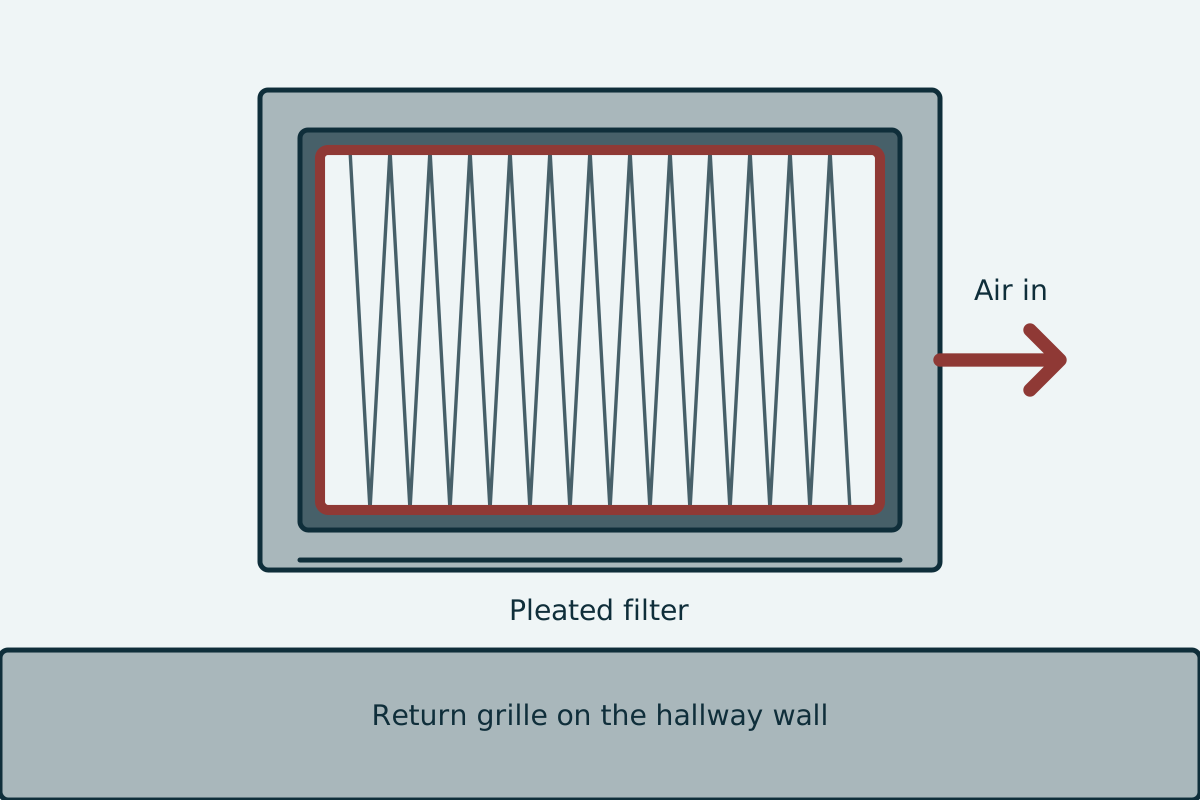
Change your furnace filter when it looks gray and clogged, and check it once a month. ENERGY STAR advises inspecting, cleaning or changing air filters once a month on a furnace, central air conditioner or heat pump, and a dirty filter can raise energy costs and shorten equipment life. ENERGY STAR advises changing a filter at least every 3 months, and more often if it is dirty. In a ducted home the same blower usually runs for heating and cooling, so the filter works for much of the year. For the rest of the yearly checklist, see HVAC maintenance and tune-ups. This page covers how often to swap it, which rating to choose, and what to look for in a maintenance and tune-up plan.
Should I change my furnace filter?
Yes. A clean filter keeps air moving through the furnace and protects the blower and the heat exchanger from dust and overheating. A clogged one makes the system work harder, raises energy use and can cause shutdowns. It is the one maintenance job that almost everyone can do themselves, and it takes a few minutes.
Here is what a dirty filter does inside the system:
- Airflow drops. The blower pulls harder to move the same air, which adds wear and noise.
- The furnace can overheat. Restricted airflow can make the heat exchanger run hot enough to trip the high-limit safety switch, so the burners shut off while the fan keeps running. That is one reason a furnace may start blowing cold air or cycle on and off, as covered in furnace short cycling.
- Dust builds up. Dirt that gets past a worn filter coats the blower and the cooling coil, and cleaning those parts costs far more than a filter.
- Rooms feel uneven. Weak airflow means some rooms never reach the temperature on the thermostat.
Sacramento homes ask a lot of their filters. NOAA 1991-2020 normals for Sacramento Executive Airport put the July average high near 92.6 F and the January average low near 39.2 F, so the system runs hard in summer for cooling and again in winter for heat. That keeps the filter in use across most of the year, not only in the heating season.
Can you run a furnace without a filter for one night?
You can, and one night is unlikely to cause lasting damage, but it is not a good habit. Without a filter, dust and pet hair go straight onto the blower wheel and the cooling coil. If the filter is wet, torn or missing, put a new one in as soon as you can and do not leave the furnace running that way for weeks.
Some points that help you decide:
- If you have just realized the filter slot is empty, turn the system off until you have a filter that fits the slot.
- Do not stack a second filter or fold one to make it fit. Wrong-size filters leave gaps that let air go around them.
- If you are out of filters on a cold night, a short run without one is a smaller problem than no heat. Replace it the next morning.
- Never run the system with the filter door off or open. The blower needs a sealed return path to work properly.
If you find the filter has collapsed, is soaked, or smells burnt, stop and have the system looked at. That points to a bigger airflow or moisture problem, and a local specialist can check it. The furnace repair page explains what that visit involves.
What MERV rating should I use for furnace filters?
Choose the highest MERV rating your furnace and filter slot can handle, and check your owner's manual first. The US EPA says to choose a filter with at least a MERV 13 rating where your system allows it. If your system cannot handle MERV 13, ask a specialist what the highest rating it can accommodate is.
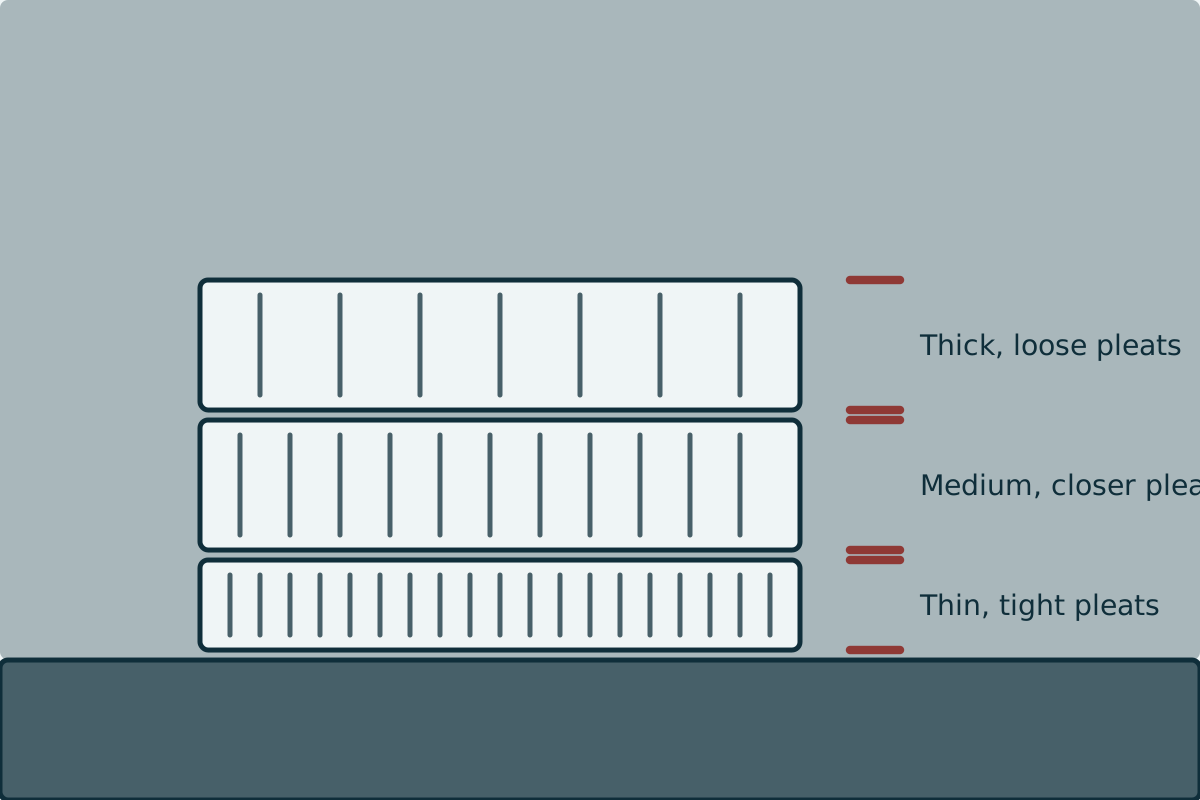
MERV stands for minimum efficiency reporting value. A higher number means finer filtering, but also more resistance to airflow. That tradeoff matters for older systems with weak blowers. A thick, high-rated filter in a system that was not designed for it can starve the furnace of air, which causes the same overheating problems as a dirty filter.
A few practical points:
- Look at the frame of your current filter. The size and thickness are printed on it, for example 16x25x1. Buy the same size.
- Check the manual or ask a specialist before moving up to a much higher rating or a deep media filter.
- A filter does not remove every pollutant from the air, so treat it as one part of keeping the home clean.
- Higher-rated filters can clog sooner in dusty homes, so check them more often after you switch.
- Pleated filters usually trap more than flat fiberglass ones and are cheap to try.
A local specialist can tell you what the blower in your system can handle and whether a bigger return grille or filter cabinet would help.
How many times should a furnace filter be changed?
Plan on checking the filter every month and replacing it at least every 3 months, more often if it is dirty. ENERGY STAR advises inspecting, cleaning or changing air filters monthly, and changing a filter at least every 3 months. Deeper media filters may last longer, and your manual gives the interval for yours.
This table gives a starting point. The usual factors that shorten the interval are pets, smokers, construction dust, many people in the house and running the fan constantly.
| Situation | Check | Usual replacement |
|---|---|---|
| Basic 1-inch filter, no pets | Monthly | At least every 3 months |
| Pets, allergies or heavy dust | Monthly | Closer to every month |
| Deep media filter (4 to 5 inches) | Every few months | Per the maker's instructions |
| Vacant home or rarely used room | Seasonally | When it looks dirty |
A simple routine works: set a repeating reminder on your phone for the first of the month, pull the filter out, and hold it up to a light. If you cannot see light through it, swap it. Write the date on the frame so you can tell how long the last one lasted.
What should a furnace maintenance agreement cover?
A maintenance agreement, also called a preventive or preventative maintenance contract, is a plan where a specialist visits once or twice a year and charges a set fee. A good one lists exactly what is checked on each visit and what is extra. Filter swaps are usually a small part of it, and you can often do those yourself between visits.
ENERGY STAR describes a heating check-up as including checks of gas or oil connections, gas pressure, burner combustion and the heat exchanger, plus tightening electrical connections, lubricating moving parts, inspecting the condensate drain and confirming the controls start, run and shut off properly. It recommends annual pre-season check-ups, with cooling checked in spring and heating in fall, because contractors get busy once summer and winter arrive. Use that list to compare what each plan offers.
Questions to ask before you sign an agreement:
- Which checks are included for the heating side and the cooling side?
- Is the fee per visit or per year, and what happens if you skip a visit?
- Are filters, small parts or repairs included, or billed separately?
- How do you cancel, and does the plan renew automatically?
- Does the plan cover one system or every unit at the property?
Commercial maintenance contracts work on the same idea but cover larger or multiple units, set service schedules and sometimes rooftop equipment. If you run a small business, ask for the equipment list and visit schedule in writing. A local specialist will quote the price for your property, and you can compare it against the HVAC tune-up cost guide.
What does a heating and AC tune-up include?
A tune-up is a one-visit service, with no ongoing agreement. A specialist cleans and checks the main parts, tests that the controls and safeties work, and tells you what is worn. For heating, the check follows the list ENERGY STAR gives for a furnace. For cooling, it adds coil, drain and electrical checks.
Because a ducted system usually uses one blower for both heating and cooling, a spring and fall pair of visits is a common schedule. If you only want one visit a year, ENERGY STAR notes that scheduling checks before the season gets you ahead of the rush. If the system is old or has had repairs, ask the specialist to point out the parts nearing the end of their life, so you can plan. The HVAC maintenance page explains what to expect and how to ask for quotes.
Between visits, you can do these safely yourself:
- Change or check the filter monthly.
- Keep supply vents and return grilles clear of furniture and rugs.
- Check the thermostat batteries and settings.
- Keep leaves, weeds and clutter away from the outdoor unit.
Leave the panels, the gas valve, the burners and anything electrical to a specialist. C-20 is the CSLB classification for warm-air heating, ventilating and air-conditioning work. Ask any specialist for their license number and check it on the CSLB License Check page of the CSLB website.
If anything about the furnace seems off, such as a gas smell, a burning smell or a carbon monoxide alarm, get outside to fresh air right away and call 911 from outside. The CPSC advises this when a carbon monoxide alarm sounds. Do not try to find the cause yourself.
If you want help getting prices for a tune-up or a plan, the Sacramento Heating and AC quote request goes to local specialists who get back to you with their own pricing. Prices vary by system and by specialist, so get more than one.
Questions people ask
How long does filter replacement furnace take?
Changing the filter yourself takes about five minutes. You slide the old one out of its slot, note the arrow for airflow direction, and slide the new one in. If a specialist does it as part of a tune-up, the filter swap is a small piece of a visit that usually runs an hour or more, depending on the checks included.
What should I ask before I hire someone for filter replacement furnace?
Ask whether the filter is included or billed separately, what size and rating they will use, and what else is checked on the visit. Ask for their California contractor license number and look it up on the CSLB License Check page. Get the price in writing before work starts, since a filter swap alone rarely justifies a service call.
Do I need to be home for filter replacement furnace?
For a simple filter swap, you do not need to be home if the filter slot is easy to reach and an adult you know can let the specialist in. For a full tune-up, plan to be there or have an adult available, since the specialist needs access to the furnace, the thermostat and the outdoor unit.
Which direction does a furnace filter go?
Look for an arrow on the filter frame. The arrow should point toward the furnace blower and away from the return duct, which means in the direction the air travels. Check the arrow each time you change the filter, because a filter fitted the wrong way round may not seat properly.
Is a more expensive filter worth it?
It depends on what your system can handle. A higher MERV filter traps finer particles, but it also restricts airflow more. Check your owner's manual for the limit, or ask a local specialist. The EPA says to choose a filter with at least a MERV 13 rating, so ask a specialist whether your system can take one.
Where these facts come from
- ENERGY STAR, Maintenance checklist for heating and cooling
- US EPA, What is a MERV rating
- ENERGY STAR, Heating and cooling
- CPSC, Carbon Monoxide Information Center
- NOAA 1991-2020 climate normals, Sacramento Executive Airport
Page updated